

In Episode 93 of the show, our mate Charlie Peabody of Portales Partners returns for our quarterly bank earnings special. Banks peaked in August/September, and Charlie thinks the balance sheet, not the P&L, is about to drive this market lower. We cover credit cards, BNPL, Goldman’s prime broking boom, the Situational Awareness liquidation, the Treasury basis trade, SDR monetization, stablecoins versus deposit franchises, and what Q3 earnings will actually show.
Show Notes
The Bearish Bank Thesis
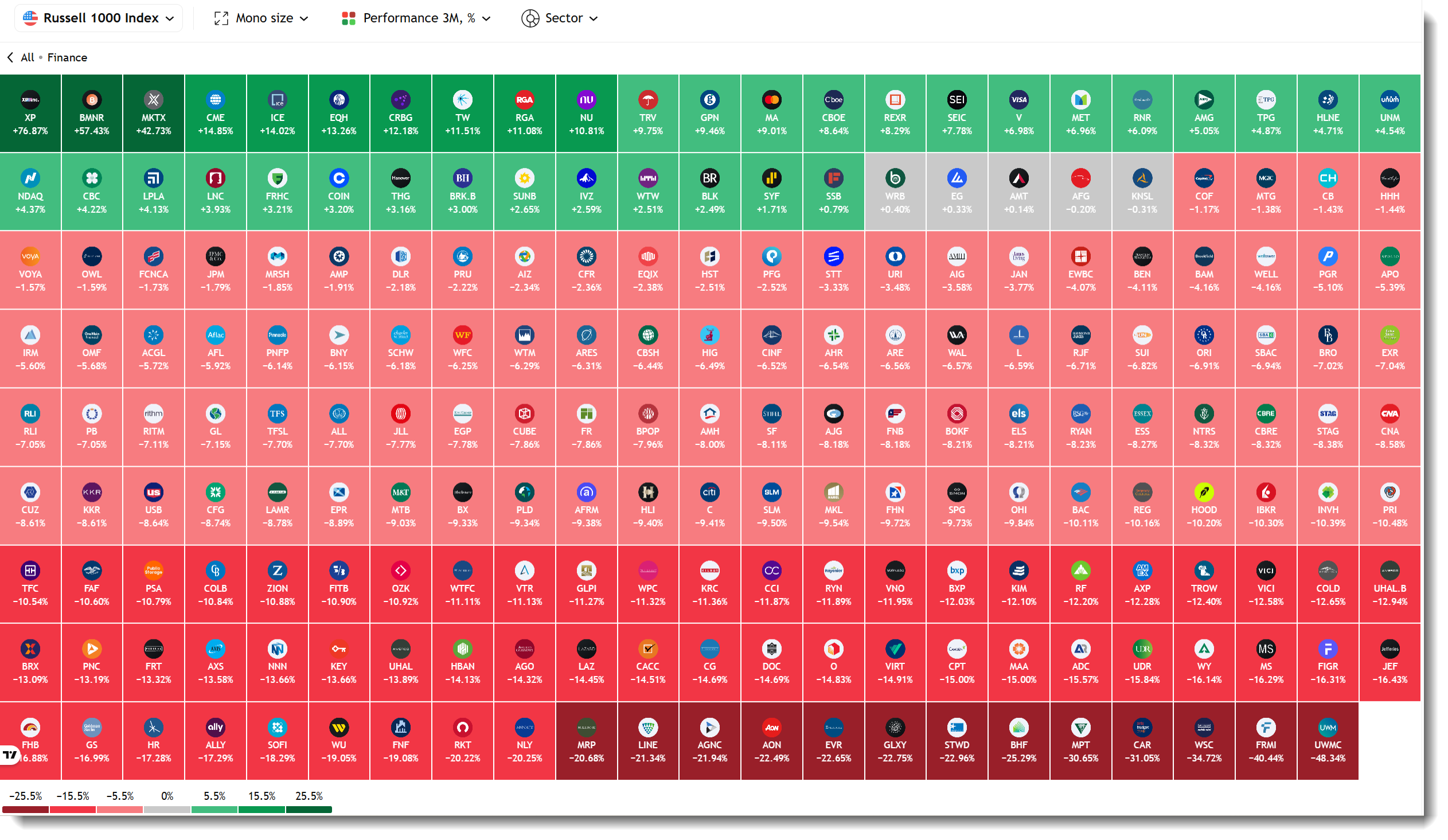
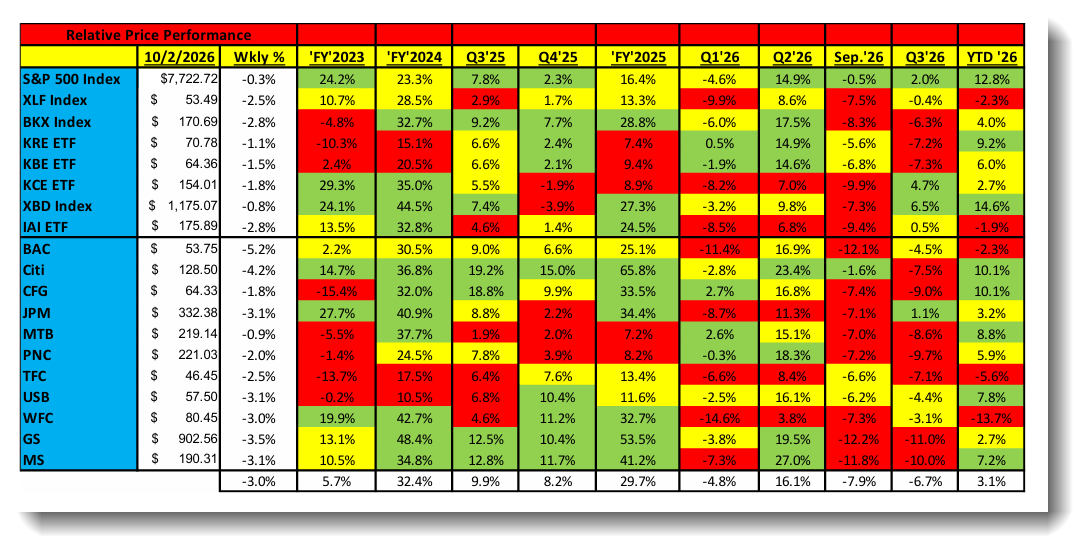
Bank stocks peaked between August and September; Charlie still expects roughly another 20% downside in some names by January and a bear market in bank indices
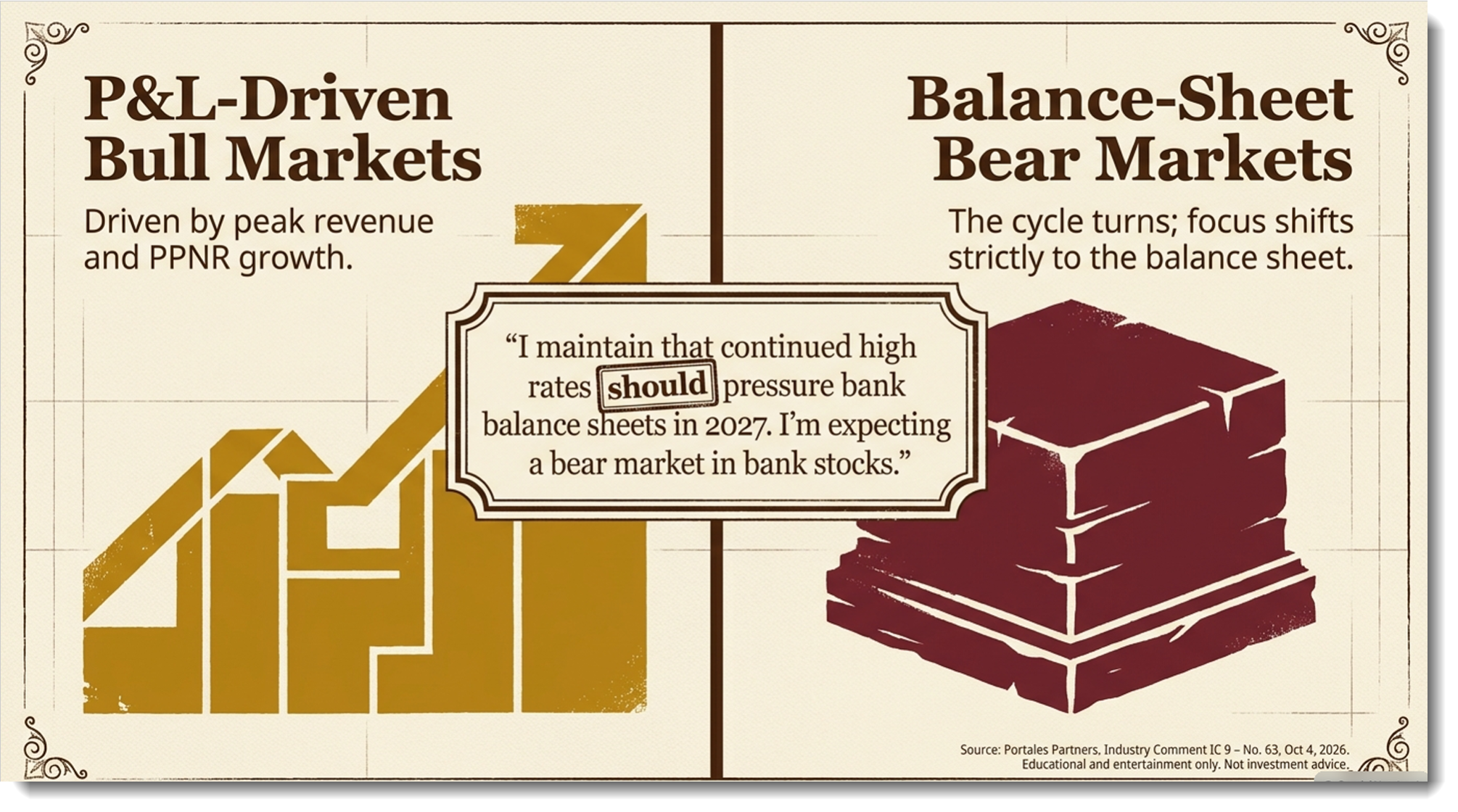
In bull markets the P&L drives bank stocks; at tops, peak revenue growth weighs, and in the developing bear market the balance sheet becomes the focal point. That transition is now underway
Within S&P Financials, credit card stocks and exchanges bounced hard after a horrendous Q2, but everything else is red, especially regionals hit by rates
Credit Cards and Consumer Credit (Minute 3)
Time to short credit card banks again: the 2007-style summer bounce was driven by seasonally bottoming credit improvement, which typically deteriorates into winter and peaks in February/March
Interchange fees are 90% consumed by rewards costs; the Trump-backed Credit Card Act (rate cap) is a renewed margin threat, even if passage odds are low
Card loan growth has slowed from double digits to mid-single digits; Citi card data shows high-end luxury spending down 6% YoY in September, an early crack in the top of the K
BNPL names (Klarna, Affirm) look precarious; Charlie believes the rate-hiking cycle is not over, expects a flatter and possibly inverted curve next year, and notes rising auto delinquencies as the leading indicator
Goldman and Prime Broking (Minute 7)
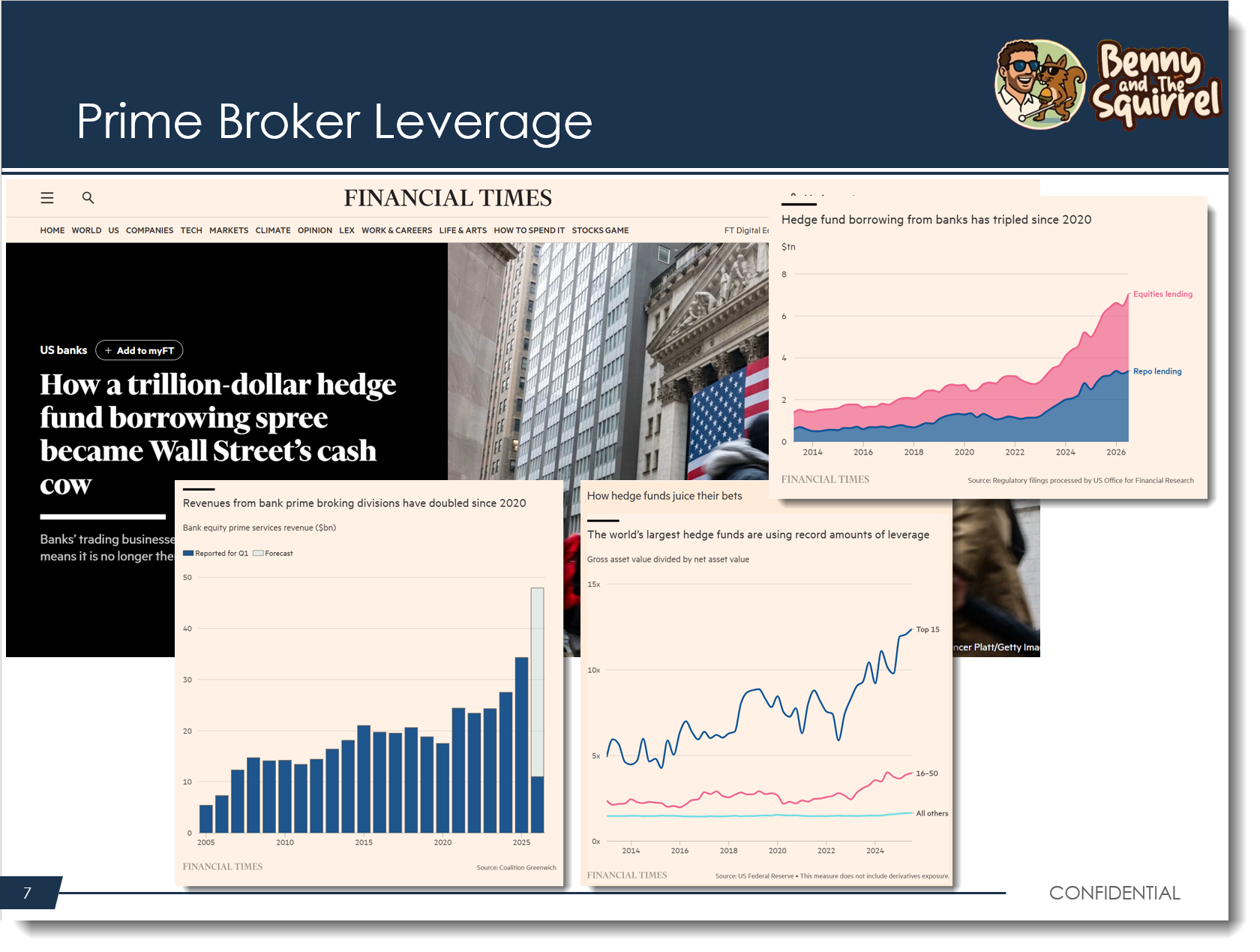
Charlie’s Q2 call that Goldman was his favorite short was a winner - Solomon’s bonus and Blankfein’s “God’s work” era
FT reporting shows prime broking revenues have doubled in five years, with leverage concentrated in roughly the top 50-100 hedge funds; Goldman’s financing revenues have ballooned as its substitute annuity after the consumer banking failure
Goldman is buying wealth management and alternative asset managers (CRE, CLOs, ETFs) at what Charlie sees as the top of the market; he gives Solomon low marks, citing the Greenpoint subprime acquisition disaster
Bank M&A Track Records (Minute 13)
Asked who acquires well: M&T Bank (Wilmers, then René Jones) for disciplined blue-collar-market deals; Jamie Dimon’s Bank One to JPMorgan lineage built the best franchise
Travelers plus Citi: supermarket banking did not work; Citi went from near market-multiple at the dot-com peak to a 10-11x name
Fraser rebuilt credibility with realistic targets versus Corbat’s financial engineering; Charlie downgraded Citi off his buy list at $147 in August/September and would re-add it around $110-105 early next year
Q3 Earnings Preview (Minute 19)
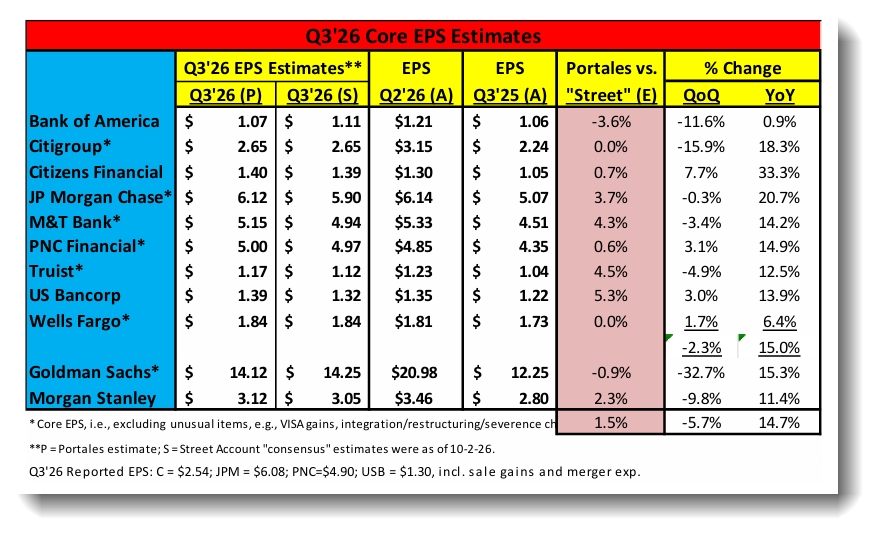
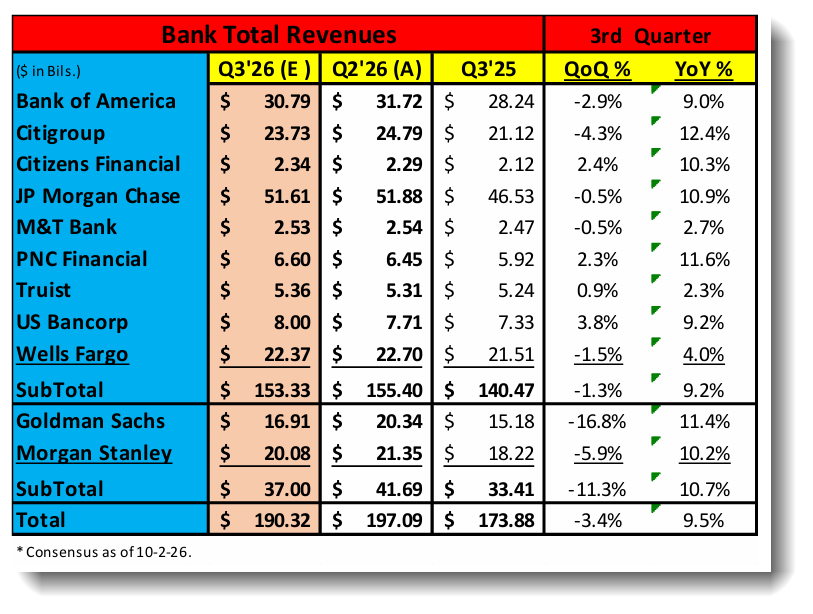
Goldman, JPMorgan, Citi and Wells report Tuesday; JPM sets the tone. Base case: mid-teen EPS growth on 9-10% revenue growth, positive operating leverage, flat provisions, and buybacks retiring 4-5% of shares annually
Surprise risk sits in two places: capital markets (September is the swing month) and corporate non-performing assets, which are very low and vulnerable to episodic spike events
Goldman pre-announced $350-400m of credit costs tied to write downs of investment banking loans on its balance sheet, possibly Paramount-related; framed as episodic, not recurring
Liquidity and Situational Awareness (Minute 22)
The corporate credit problem is bigger than NDFIs/private credit: it is an asset-overvaluation problem spanning office, used cars, levered hedge funds, MBS posted by life insurers, Treasuries in repo, and securities-based loans now rivaling credit card outstandings
On the Situational Awareness liquidation: primes reportedly got out whole; JPMorgan cut ties while Goldman stayed; hedge funds now have leverage over primes, forcing six-month notice periods into prime brokerage funding contracts (previously days, weeks, then months)
Banks have shifted from stockpiling liquidity (cash at the Fed) to just-in-time liquidity management: lower LCRs, prepositioning at the discount window; Charlie sees liquidity drying up into year-end
Treasuries Basis Trade (Minute 30)
The Treasury basis trade has grown by $1.5-2T in repo-financed Treasury longs since 2023: levered, not true, ownership is a metastable setup
Charlie’s macro biases: no Fed hike at the October 27-28 FOMC, oil toward $120, then the market prices the Fed as behind the curve, forcing tightening in December and early next year; inversion would stress the basis trade
Bond selloff framed as repricing fiscal policy: the $40B SpaceX GPU deal, US deficits of 6-7% plus Europe, Japan and China all running hot
SDR mechanics: the $5B SDR increases in June and December 2024 look like trial runs; drawing SDRs could add $150B-plus to the TGA for buybacks or stimulus; “grow our way out” is the administration’s route
Capital and Buybacks (Minute 39)
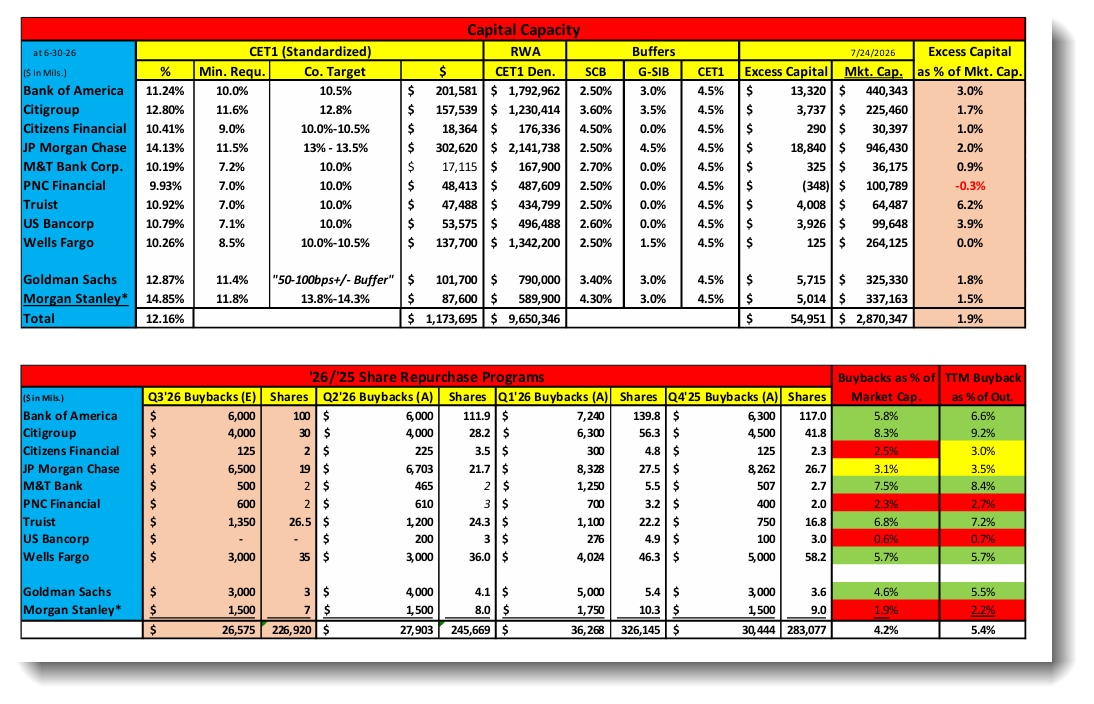
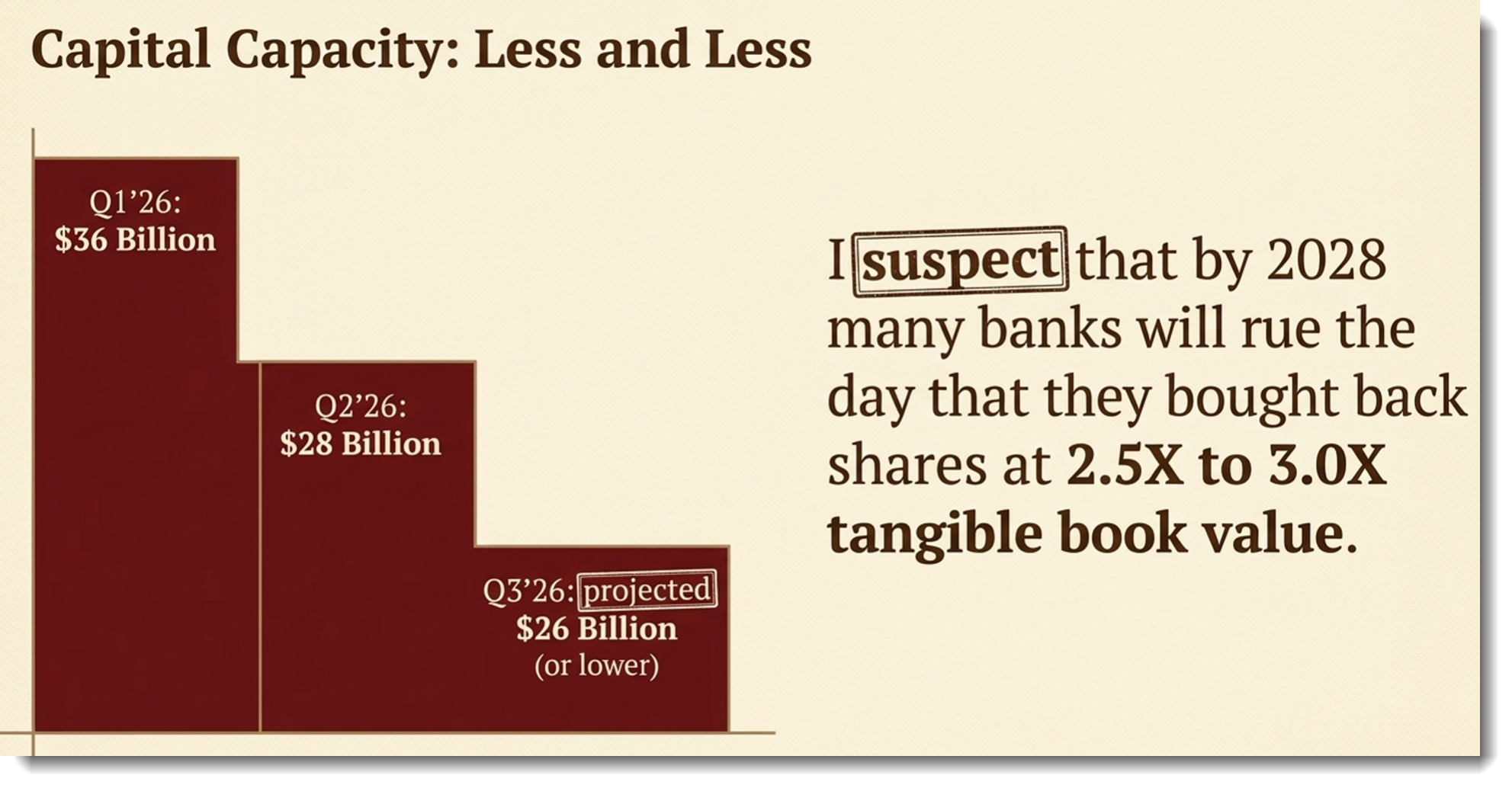
Banks ran capital down too aggressively via buybacks, then faced AI-funding balance-sheet expansion (corporate loans growing 9-10% vs 6% nominal GDP), unrealized bond losses, and capital relief delayed to H2 2027/early 2028; US Bancorp bought back zero stock in Q3
Anthropic IPO is the big capital-markets payday; watch whether Dimon cheerleads or flags risks. The pulled neocloud deal (Nvidia-backed) is seen as the beginning of the end for circular AI financing
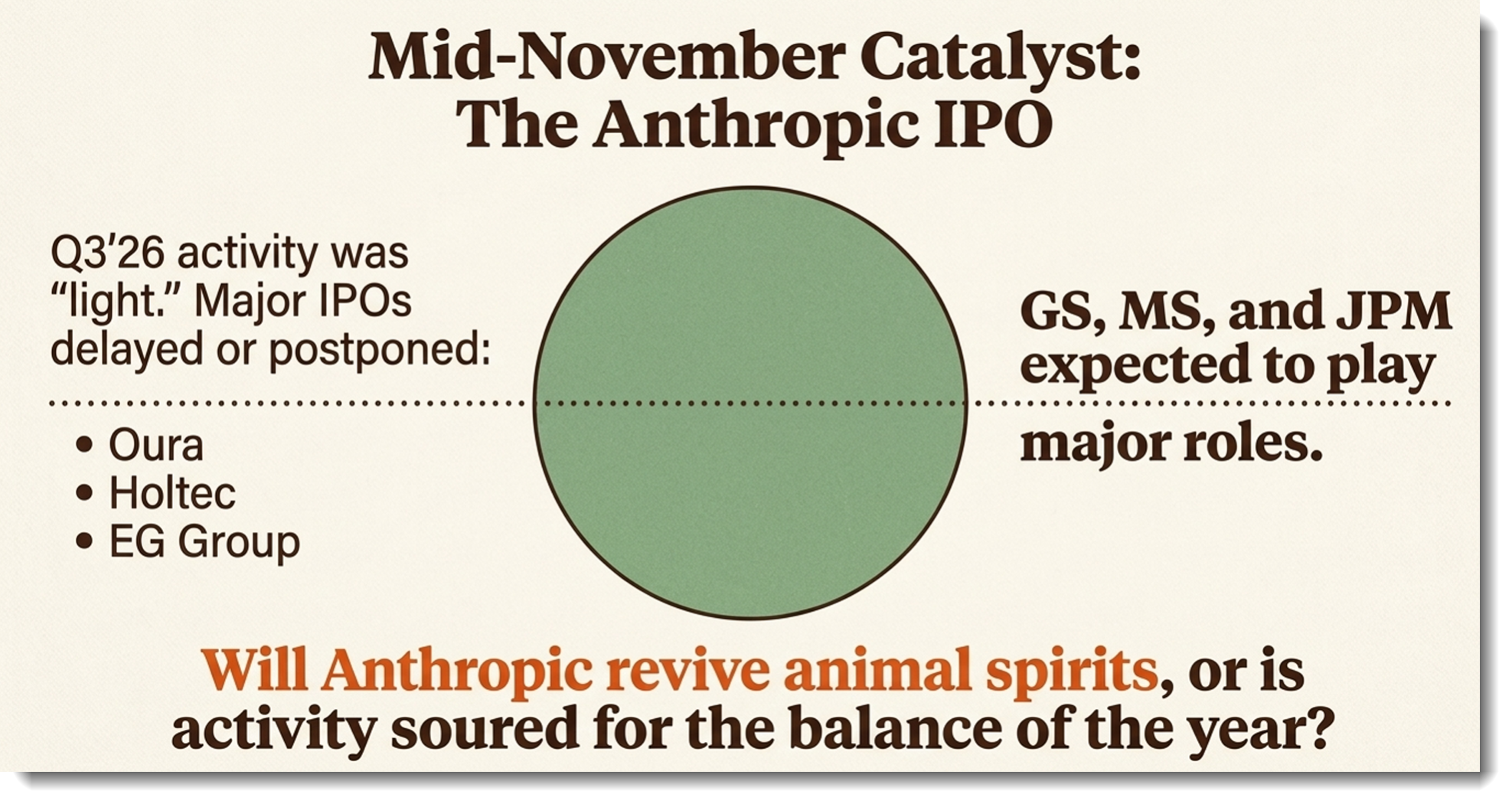
Buy-side anger over Paramount Skydance debt secondary performance at BofA/Citi; Apollo leading the SpaceX chip financing shows private credit taking underwriting share from banks
Stablecoins and Deposit Franchises (Minute 48)
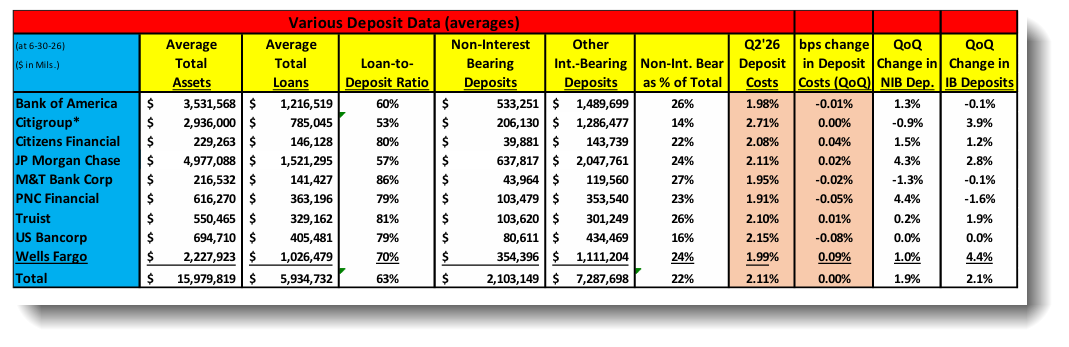
Industry deposits fell about 1% in Q3, surprising bankers who guided to second-half growth; corporate and wealth deposits are most yield-sensitive, while core consumer deposits are what stablecoin legislation (Clarity Act) threatens
🐿️’s math: $27T of global non-interest-bearing deposits equates to roughly $170B of NII supporting financial repression; studies suggest deposit repricing to 4% would leave about 80% of banks unprofitable, so damaging deposit franchises is self-defeating even if stablecoins could buy bills
Charlie expects another big deleveraging event within four months, citing deteriorated asset liquidity, stalled deposits, and elevated leverage
Positioning into 2027 (Minute 55)
Late-week bid in bank stocks looks like rotation out of tech; Q3 itself offers few surprises, and 2027 guidance will stay vague until December/January
Potential offsets to the bear view: rate hikes help asset-sensitive NII (JPMorgan, Citizens, PNC, and Wells Fargo, where the $50B NII guide could rise), and Q1 is seasonally strongest for capital markets, favoring the Anthropic IPO leads (Goldman, Morgan Stanley, JPMorgan)
Closing thought: private equity/private credit book values are opaque and likely overstated, so FRE forecasts of 20-25% growth next year should be down; market turns are multi-year processes (GFC resets visible from 2004-05, dot-com unwound in waves), and the risk has not left the system, only changed hands…
If you act on anything provided in this newsletter, you agree to the terms in this disclaimer. Everything in this newsletter is for educational and entertainment purposes only and NOT investment advice. Nothing in this newsletter is an offer to sell or to buy any security. The author is not responsible for any financial loss you may incur by acting on any information provided in this newsletter. Before making any investment decisions, talk to a financial advisor.


