

Episode 85 was recorded at 6.30 EST on Thursday 10th September, 2026. We were joined by Herve van Caloen, Founder and CIO of Mercator Investment Management. Starting his career as an analyst at Scudder, Stevens and Clark in 1985, when global investing was still in its infancy.
He later launched The PaineWebber Europe Growth Fund, the first mutual fund specializing in both Western Europe and in the former communist countries of central Europe. In the mid 1990s, Mr. van Caloen led the international investment effort at Provident Capital Management and later served as First Vice President of Schroders in New York.
Show Notes

Introducing Herve
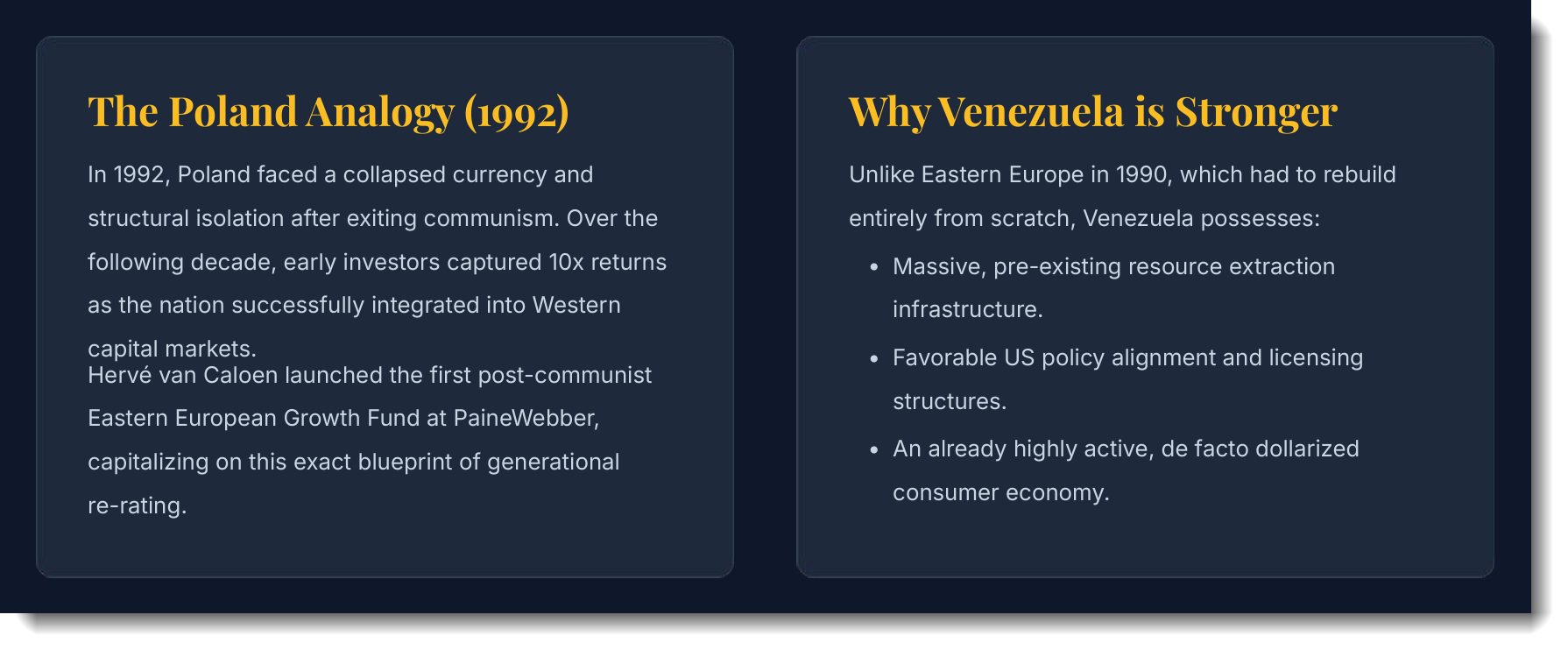
Formative lesson: Scudder’s Korea Fund was the first into a closed Korean market, and his Paine Webber fund was the first US mutual fund investing in Eastern Europe; markets that open up offer outsized potential.
Poland’s post-1989 “shock therapy” was widely predicted to fail but worked; Poland is now the fastest-growing economy in Europe, proof that rule of law plus free markets can rebuild a country in one generation.
Unlike Poland starting from scratch, Venezuela is a capitalist system in “suspended animation” for 30 years.
Political Transition
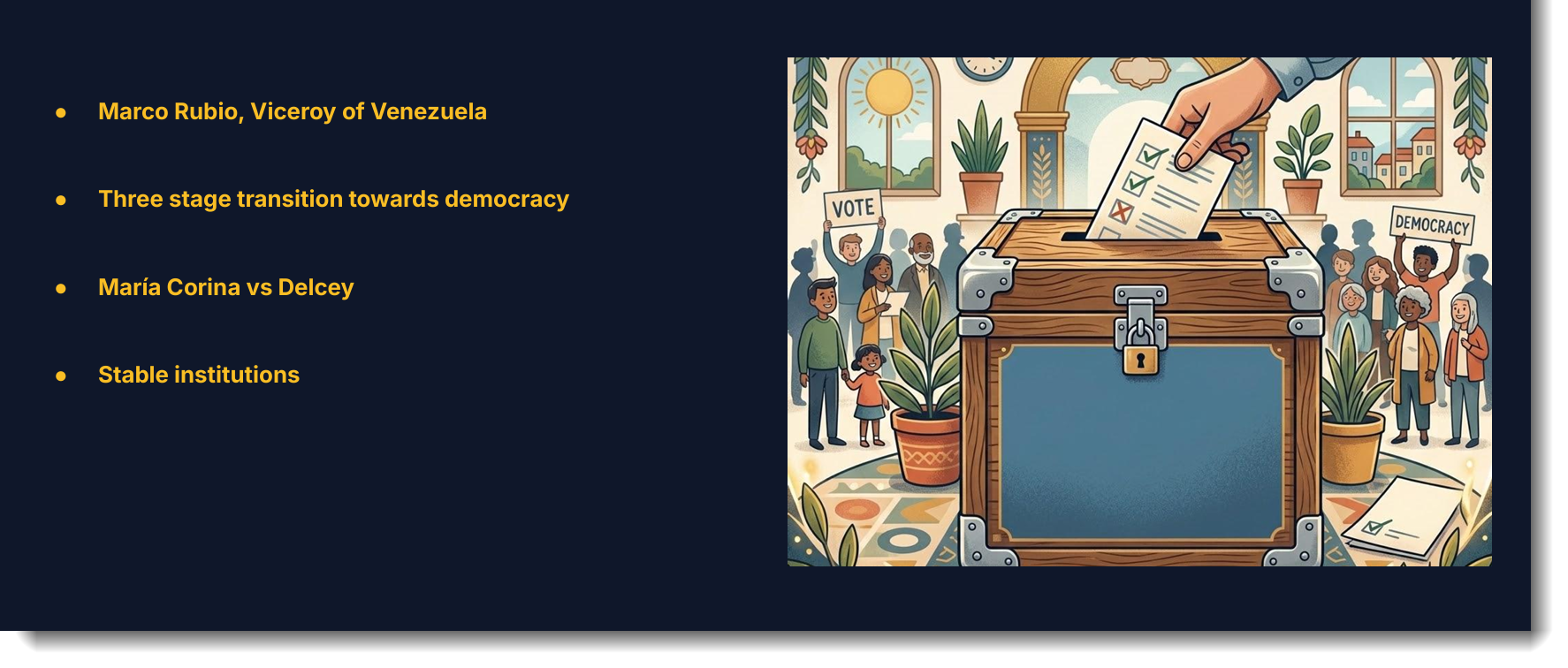
Current setup: Delcy Rodriguez as interim leader with Washington calling the shots (Rubio as de facto “Viceroy”, ultimately Trump); necessarily temporary.
Institutions must be built before elections (most expect 2027) so results are accepted by all sides, including Chavistas as the future opposition; a Mandela-style “truth and reconciliation” approach rather than revenge cycles.
Controversy: hydrocarbon licenses awarded without competition to Chavez-era businessman Betancourt; a pragmatic “he gets things done” logic, but it is costing Trump local popularity and adding pressure to accelerate elections.
Macro setup and banking (Minute 8)
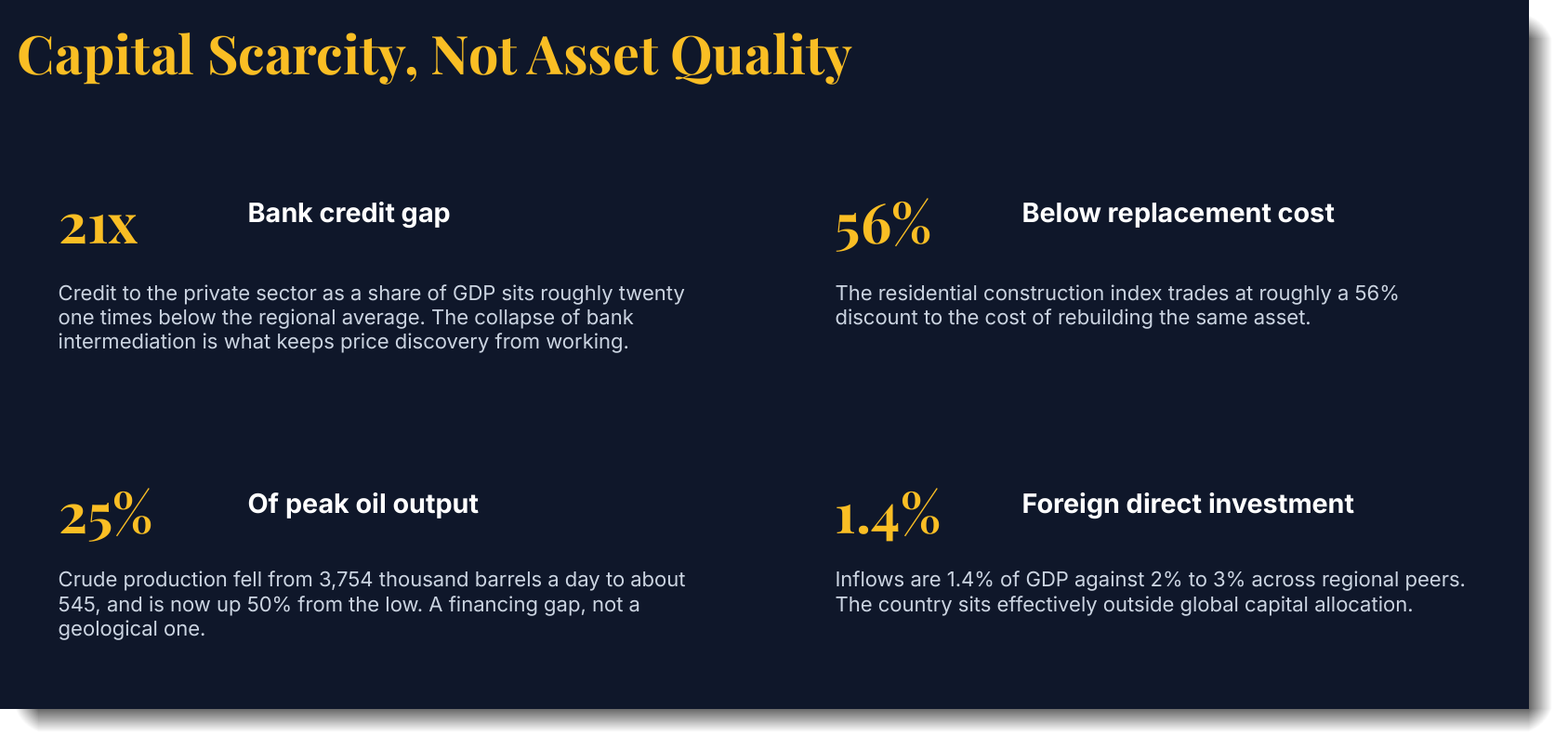
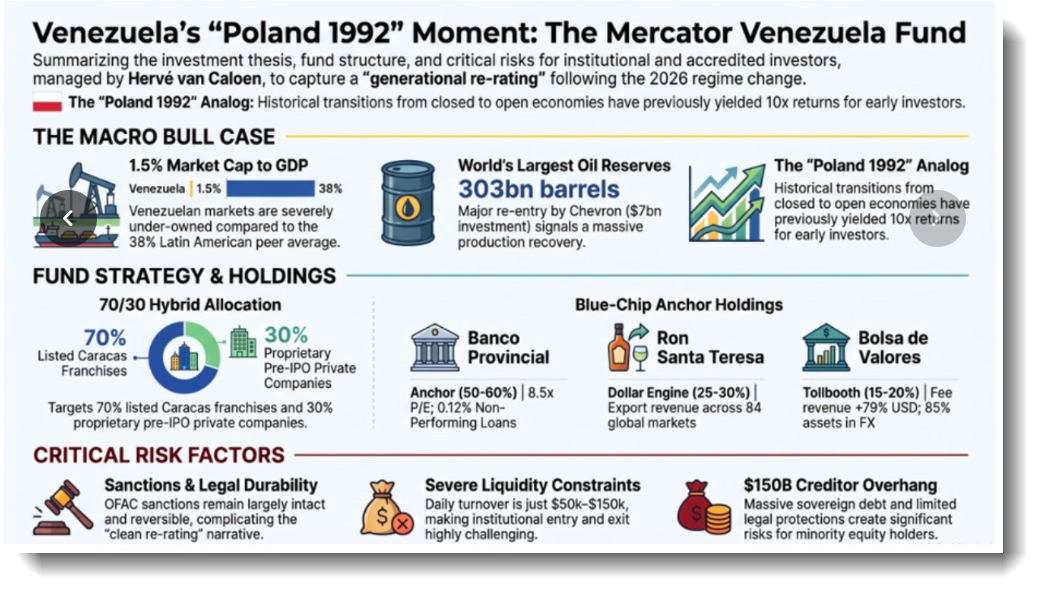
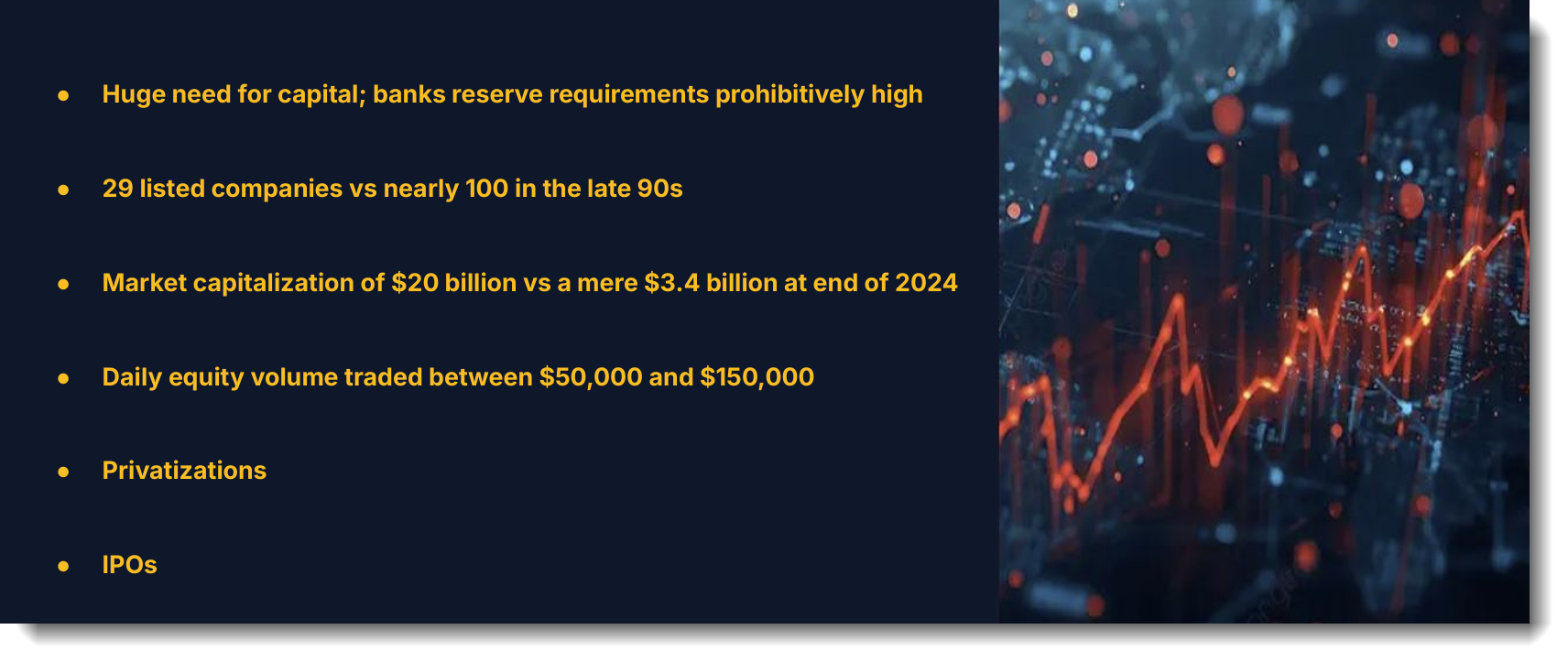
The math: GDP is roughly one third of pre-Chavez levels and must triple to normalize; market cap is 1.5 to 2% of GDP versus a roughly 40% Latin American average, implying around 60x market cap growth just to reach normality.
Listing wave ahead: companies are starved of capital, banks are not lending, and selling via the exchange attracts roughly 1% capital gains tax versus 34% on a private sale; Herve’s Caracas partner (the largest local broker) is working on two IPOs.
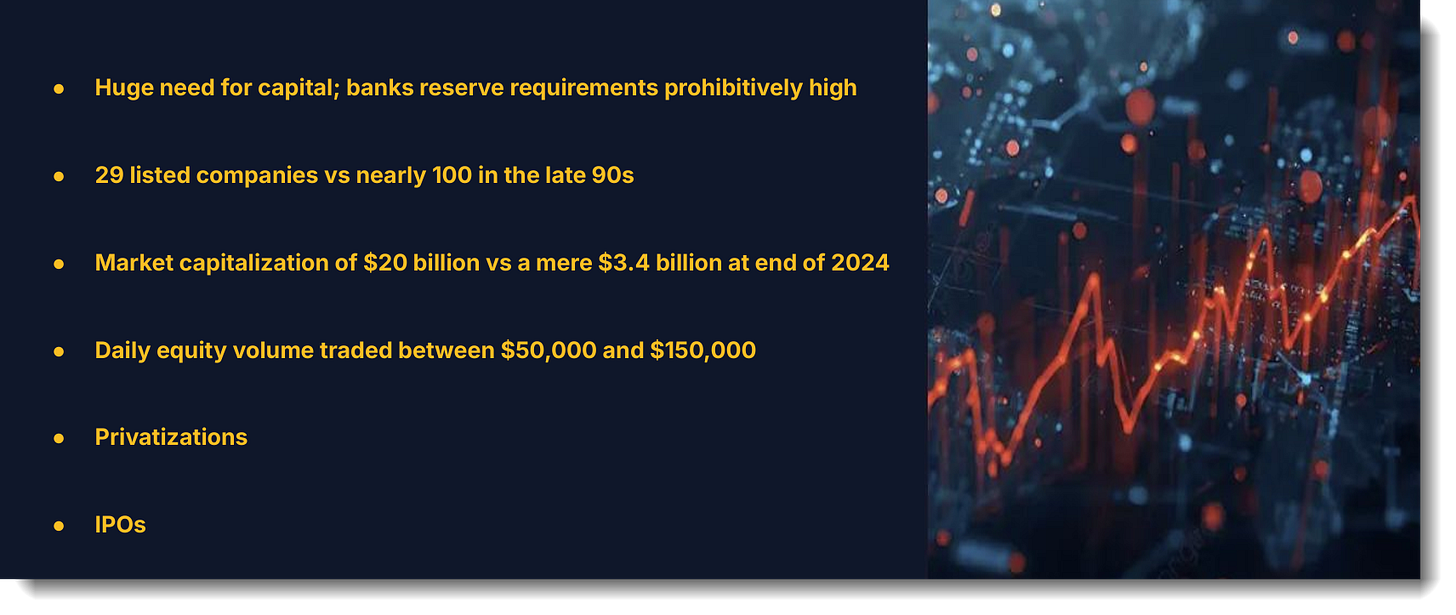
Why banks cannot lend: inflation still 400 to 500% and reserve requirements raised to 73% have frozen credit; no mortgages, no business loans.
Workarounds filling the gap: BNPL booming, rapid informal dollarization, a physical dollar shortage, and Thiel-backed Erebor Bank distributing USDT stablecoins, which is channeling dollars into the system.
Sanctions: no OFAC bar on foreigners or Americans buying Caracas stocks, provided companies are not government-linked; sanctions are being lifted sector by sector, oil first, mining next.
Oil rebuild will be slow and expensive (heavy crude needing pre-refining before Texas); Chevron has flagged roughly $7 billion and Betancourt is talking about $100 billion, though his deal may breach the constitution; risk of a local backlash against “Yankee” takeovers.
Diaspora: over 8 million emigrants, many successful abroad, are keen to invest or partially return (Margarita Island property, tourism, pharma distribution).
The pitch to skeptics: pre-Chavez Venezuela was Latin America’s richest economy, with a US-educated elite (MIT, Harvard) and an America-facing culture (baseball, not soccer).
Stocks and Currency (Minute 24)
Strategy: the classic EM starter kit (banks, brewers, cement) applies but will quickly broaden; anchor holding Banco Provincial trades on a single-digit earnings multiple and 2.6x book, valued on what the bank could become, not its current state.
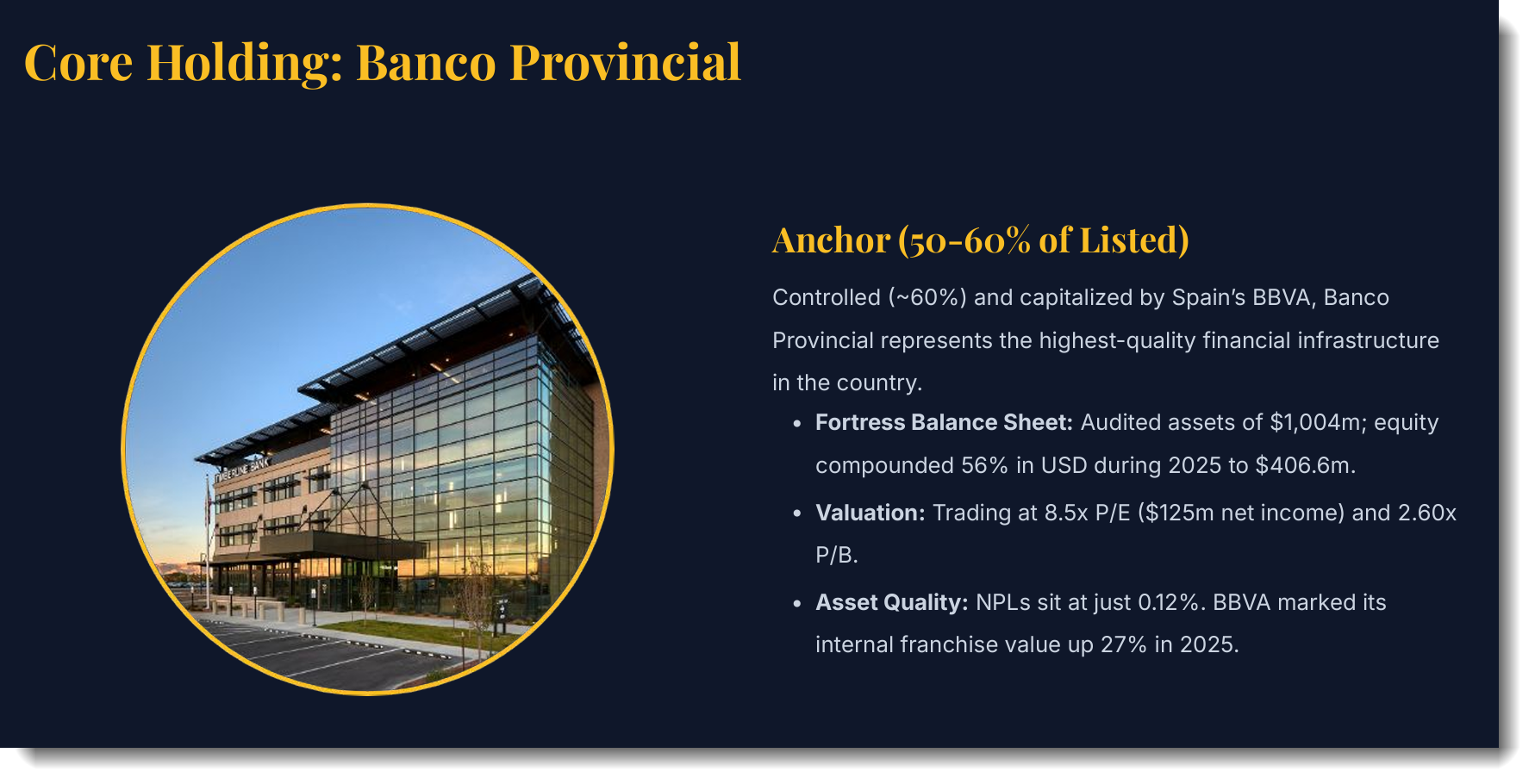
BBVA (Provincial’s largest shareholder) is the only foreign bank that never left Venezuela (even Citi quit) and should benefit from that loyalty.
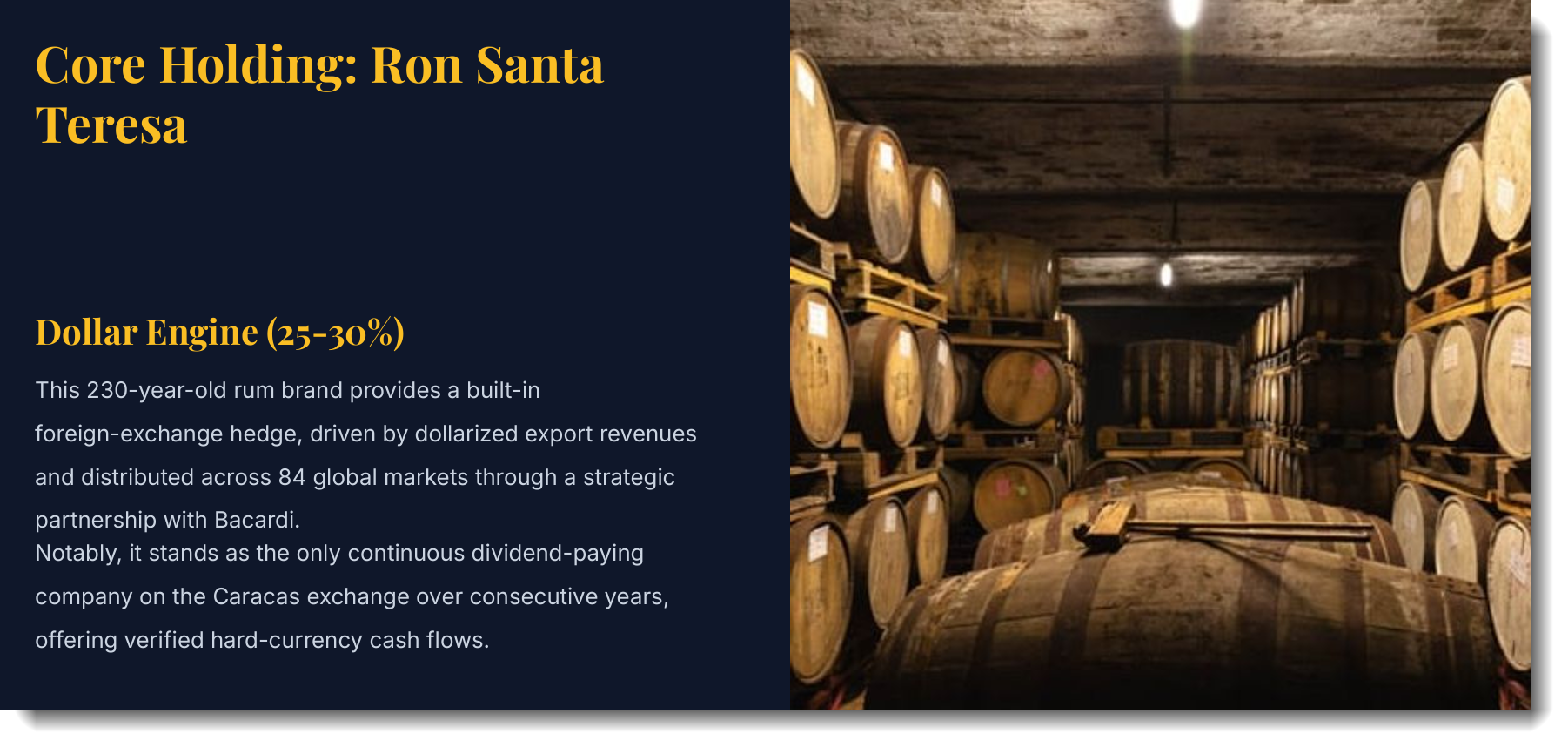
Rum not beer: Ron Santa Teresa, already exporting to 80 countries via Bacardi’s network, earning dollars with bolivar costs
Unusually sophisticated candidates for a frontier market: Ridery and Yummy Rides (local Uber/Lyft equivalents), Socado Coffee (“ten times better than Starbucks”)
Foreign competition is arriving: Colombia’s Nutresa bought Tio Rico (ice cream, roughly 50% share) and Uber entered food delivery via Delivery Hero’s PedidosYa; local champions need capital to fight back or be sold out.
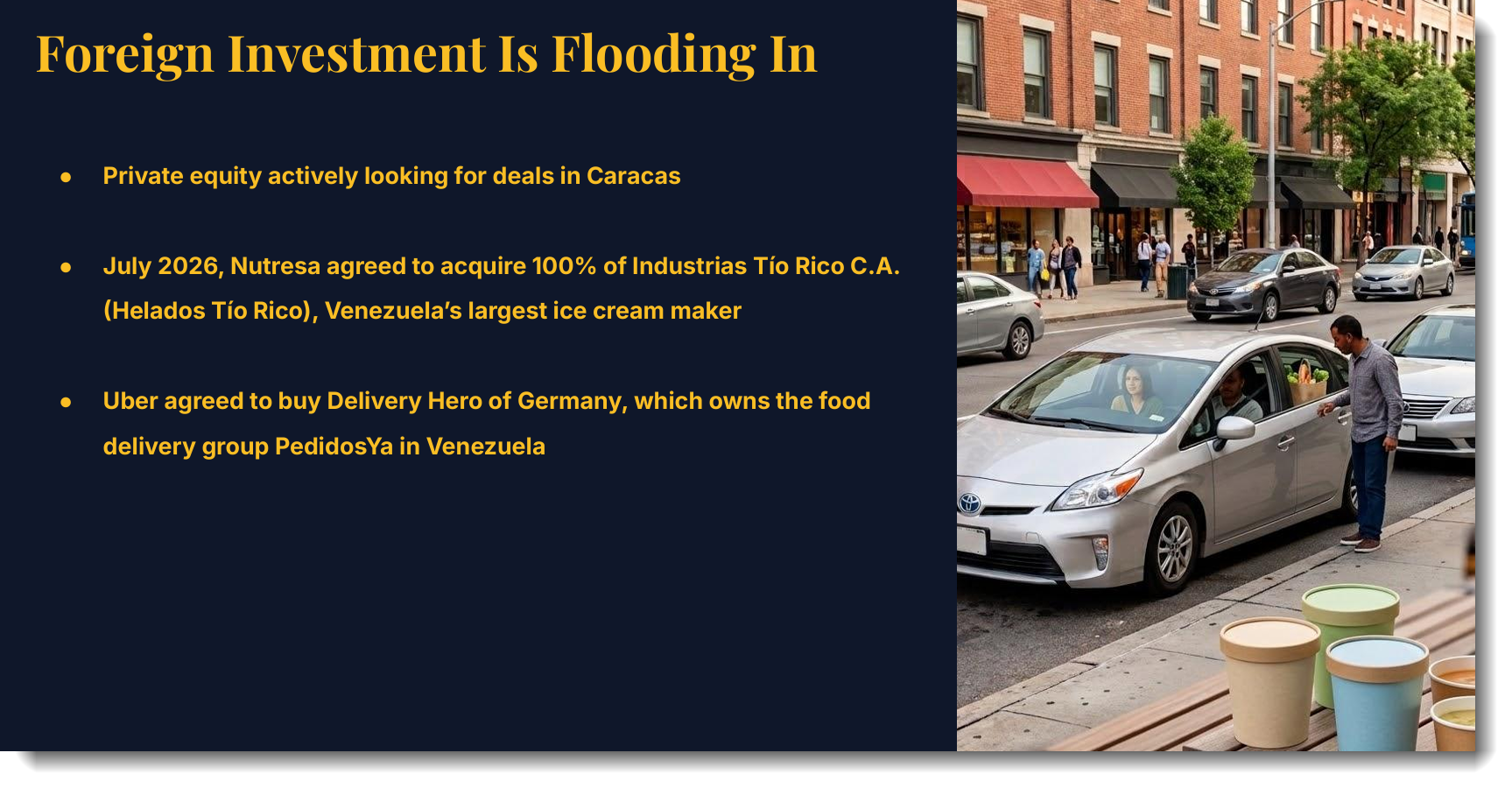
Herve’s Mercator fund: equity only, aiming to be first to bring liquidity to the exchange; small first tranche, then a larger one if it takes off; the exchange president is fielding tens of companies seeking capital.
Third Core holding: the Caracas exchange itself, a listed “toll booth” with only about $150k of daily volume, so pure upside; US market cap to GDP above 100% shows the long-run headroom beyond the 40% normalization target.

Currency risk answer: dollarization; the gap between the official and parallel rates has narrowed from about 30% to roughly 15% and is heading toward zero.
Inflation is easing (August monthly under 10%); the real economy transacts in dollars, restaurants use a “priced in euros” loophole to beat the official rate, and stablecoins are likely to play a major role, echoing the Turkey/Bitcoin dynamic.
Politics and Sizing (Minute 40)
2027 elections are plausible as locals grow impatient; the goal is a strong constitution and institutions, curbing corruption and army influence, and binding the economy to the US so reversal is hard; in the end “only one person calls the shots today and it’s Trump.”
Chavistas retain positions of power; tension between reconciliation and revenge (his driver’s father wants revenge, the son wants to move forward); expect punishment for the worst actors and quiet exile for cooperators.
Portfolio framing: a convex call option; Poland rose about 10x in the six years after its market reopened; buy now and do not look at it for five years, because an election announcement would gap the market with too little liquidity to chase.
Venezuela Market context: the exchange jumped roughly 140% in dollar terms after January 6, then moved sideways as investors await confirmation of the transition.
Sourcing stock: hunting secondary blocks and IPO allocations now, with government privatizations to come; listed companies are happy to dilute given how scarce capital is.
Follow Herve on LinkedIn and Twitter.
If you act on anything provided in this newsletter, you agree to the terms in this disclaimer. Everything in this newsletter is for educational and entertainment purposes only and NOT investment advice. Nothing in this newsletter is an offer to sell or to buy any security. The author is not responsible for any financial loss you may incur by acting on any information provided in this newsletter. Before making any investment decisions, talk to a financial advisor.


