

Episode 83 was recorded at 8am Tokyo Time on Friday 4th September, 2026. We were joined by Jesper Koll - the Japan Optimist. Jesper is an economist, investor and an unashamed Japan bull! --- ex JPMorgan & Merrill Lynch Chief Economist/Strategist & Head of Research ; Board Director at OIST, the Asia Society and three Japanese start-ups; Global Ambassador at Monex Group and for the Tokyo Financial Center.
Show Notes
Yen intervention and “Oriental Maggie”
Is there real coordination between the MOF, US Treasury and others behind the yen moves of recent weeks?- “the last 3 to 4 weeks have seen a weaponization of the yen,” with Bessent, Trump and Tokyo speaking with one voice; 160 in dollar-yen is the threshold of pain.
The real pressure is political: polls show 90 to 95% of Japanese feel the purchasing power pinch, and every 10 yen of depreciation adds roughly 0.4 to 0.5 percentage points to CPI.
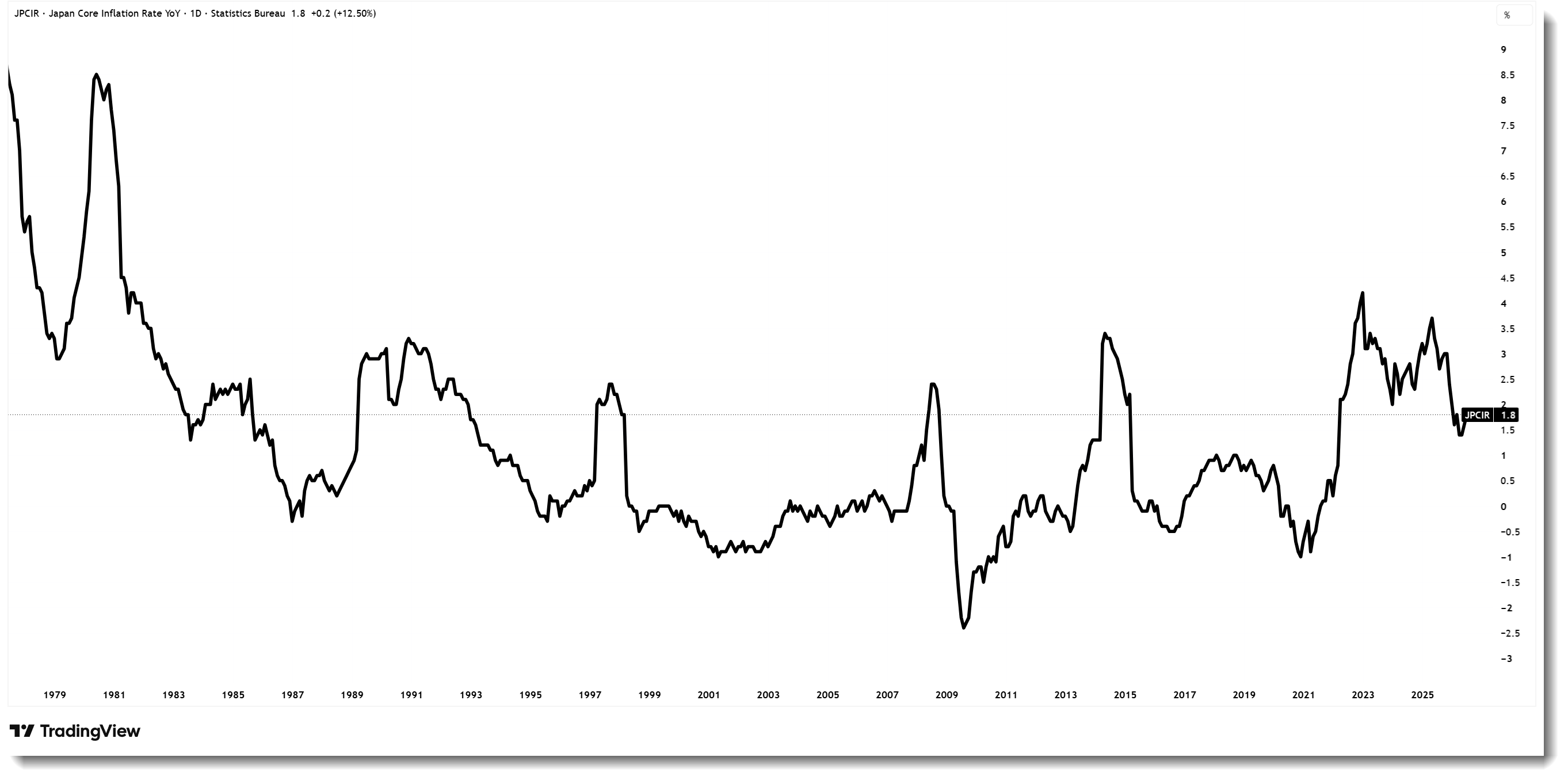
One in three households are pensioners, and the pension “macro slide” means payouts rise only about 1.9% when CPI rises 3%, so pensioner purchasing power is being decimated.
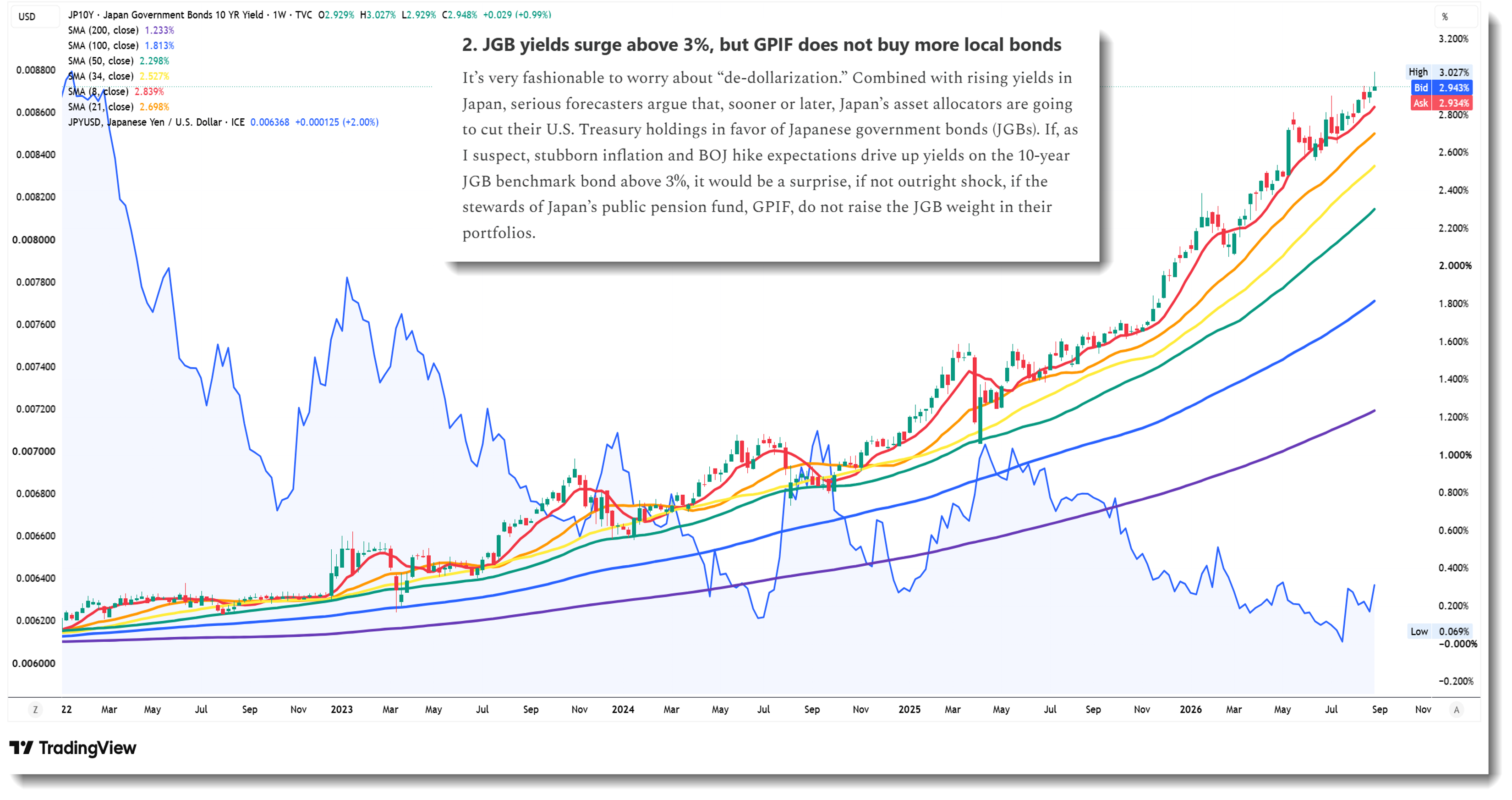
Backdrop: inflation expectations, a BOJ behind the curve, and Takaichi’s aggressive fiscal program mean bond issuance keeps rising.
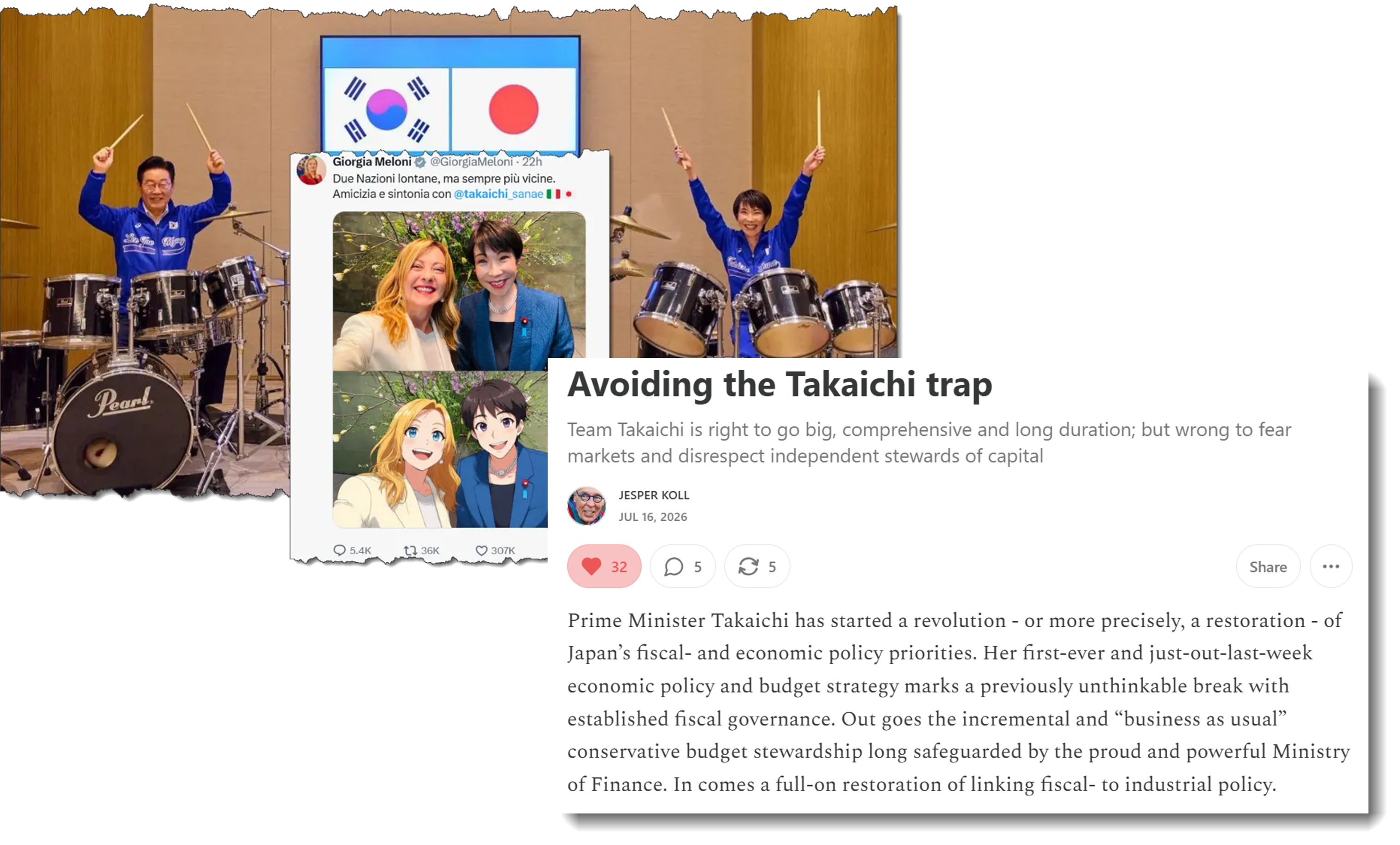
Portrait of Takaichi: obsessed with power, a ruthless Machiavellian on cabinet control, and un-Japanese in style, deciding by phone and email rather than consensus building; “she is the nail that stands out”.
In February she ended Japan’s voluntary restraint on exporting offensive weapons in a single day, something Abe tried and failed to do; frigates (to Australia), submarines and missile defense can now be exported, and industrials rank dual-use and defense tech as their number one or two growth opportunity.
Fiscal revolution: multi-year budget commitments beyond the old carve-outs (defense 5 years, education 3 years), now 10-year programs for quantum computing, robotics, AI and anime/content.
Scale: Tanaka Kakuei’s 1970s restructuring started at 20% of GDP; Takaichi’s program is about 60% of starting GDP, with decade-long commitments to data centers, robotics plants and submarine plants.
Versus Abenomics: Abe faced a minus 4% output gap and deflation risk; today the output gap is positive (BOJ estimate around plus 1%), rates are rising, and the fiscal mix is investment-led through public-private partnerships (10% government, 90% private, with debt guarantees). This is not consumption-led reform.
Onshoring logic: at 160, the yen makes Japan viable as an Asia-Pacific export hub, so corporate savings should come home.
BOJ constraints and capital flows (Minute 14)
Intervention theater: the BOJ did nothing at the last meeting, then Ueda said he was convinced inflation accelerates in H2 (so why not hike?); Bessent’s staged Reuters photo was “all-time trolling.”
Why the BOJ is slow:
fiscal constraint: debt at 260% of GDP means each 100 basis points of rate rises adds about 1 percentage point of GDP to interest expense; interest already absorbs about 26% of the national budget, heading towards one third; the real constraint is political, since less discretionary budget means less power to allocate.
financial fragility: regional banks, credit cooperatives and credit unions lack people, systems and compute after 20 years of zero rates (only seven JGB traders were left when Ueda arrived); credit co-ops just posted their worst results since the bubble collapse, with bankruptcies starting; big insurers reported unrealized losses near 7% of AUM in the June quarter.
The implosion risk is not the GPIF announcing a shift out of Treasuries (a pipe dream); - it is the forced selling of USTs to cover domestic losses.
Reality check from Jesper’s presentation to the GPIF allocation committee: the fund must be able to liquidate 50 to 100 billion dollars in two days without moving price, which only the UST market allows; selling even 5 billion of JGBs moves the needle.
The JGB market has been re-privatized: roughly 80% of transactions are now private-to-private, versus 80% BOJ-dominated under yield curve control.
Ten-year JGBs around 3% are genuinely attractive: the insurers’ guaranteed rate (yotei) is 1.6%, so 3% lets them clip coupons and play golf, consistent with 1 to 1.5% trend growth plus 2% inflation; a floor under JGBs is established.
Domestic trust and the bureaucracy (Minute 26)
The dirty secret - the only buyers of Japanese equities are foreigners and corporations via buybacks; domestic asset owners have been net sellers for 2 to 3 years.
Why: America is seen as the nerve center where capital is treated best (tax, rules, liquidity, pro-capital politics), while Japanese investors fear domestic rules will change, especially capital gains tax, with AI-driven labor displacement creating pressure to tax capital to fund a basic income.
Takaichi is not capital friendly on tax: she cut the food consumption tax but did nothing for corporations; the governance code update empowers boards to reject takeover bids; the founder minimum tax threshold was cut from 300 to 160 and the rate raised.
The civil service (“Men in Grey Suits”) is bought in: Abe vetoed about a third of senior ministry promotions each year, while Takaichi rubber-stamped everyone, so METI and agency bureaucrats write the policy detail, which is bullish for the longevity of the reforms.
Jesper’s meta case for Japan: (1) labor scarcity forces companies to rethink incentives and retention, and (2) both big partners have become unreliable, with 32% of profits tied to the US and 18% to China (Toyota just announced another China factory).
Geopolitics, banks and sector calls (Minute 36)
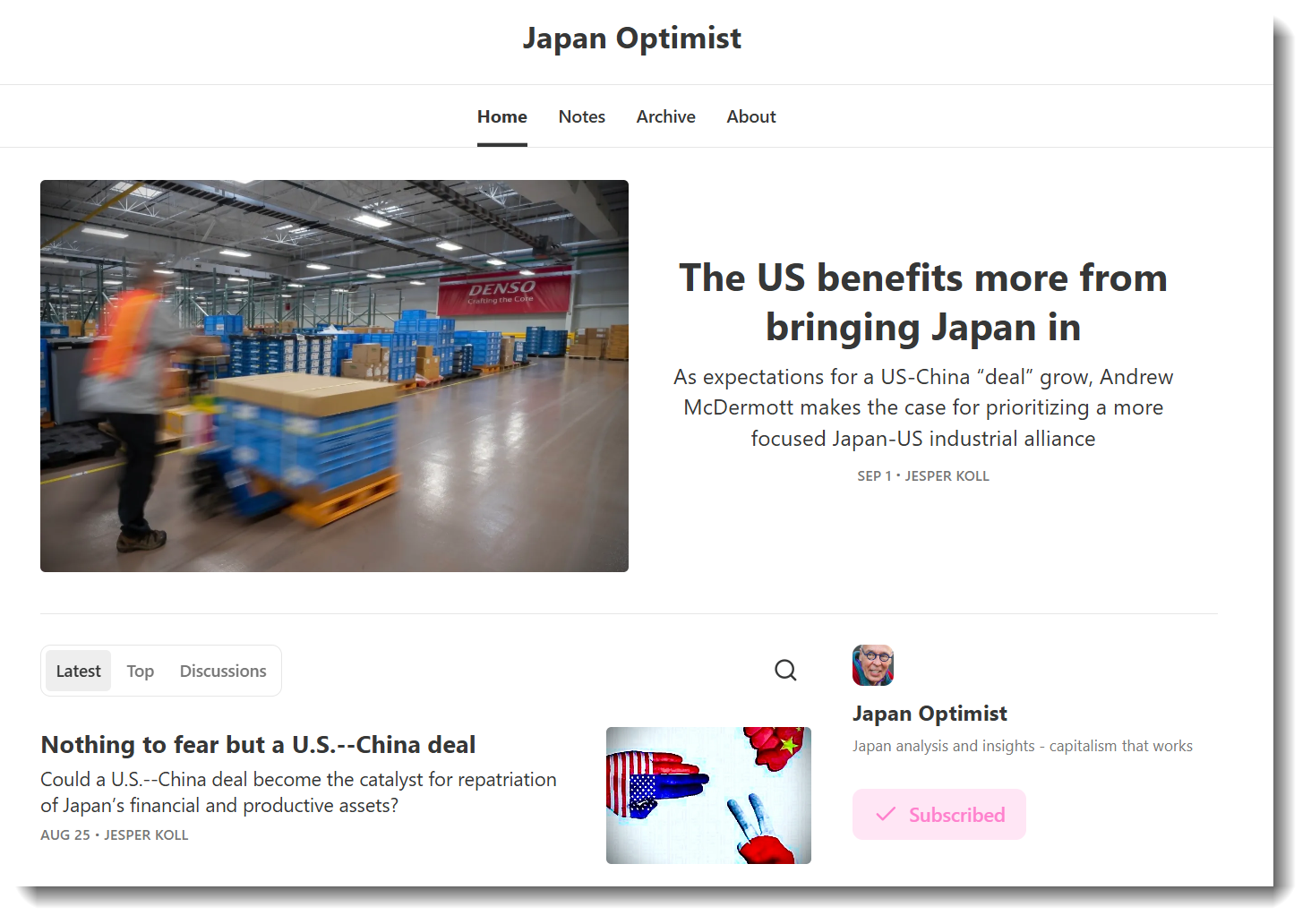
Nightmare scenario: a Trump-Xi deal opening the US market to Chinese products and joint ventures (BYD building US factories with Ford) would gut Japan’s most profitable market; Japanese car makers were happy to pay the 15% tariff (effectively 7 to 8%) as protection to keep Chinese cars out.
Hyper-speculative barter: China gets US market access and technology transfer in exchange for reallocating sovereign reserves into US Treasuries.
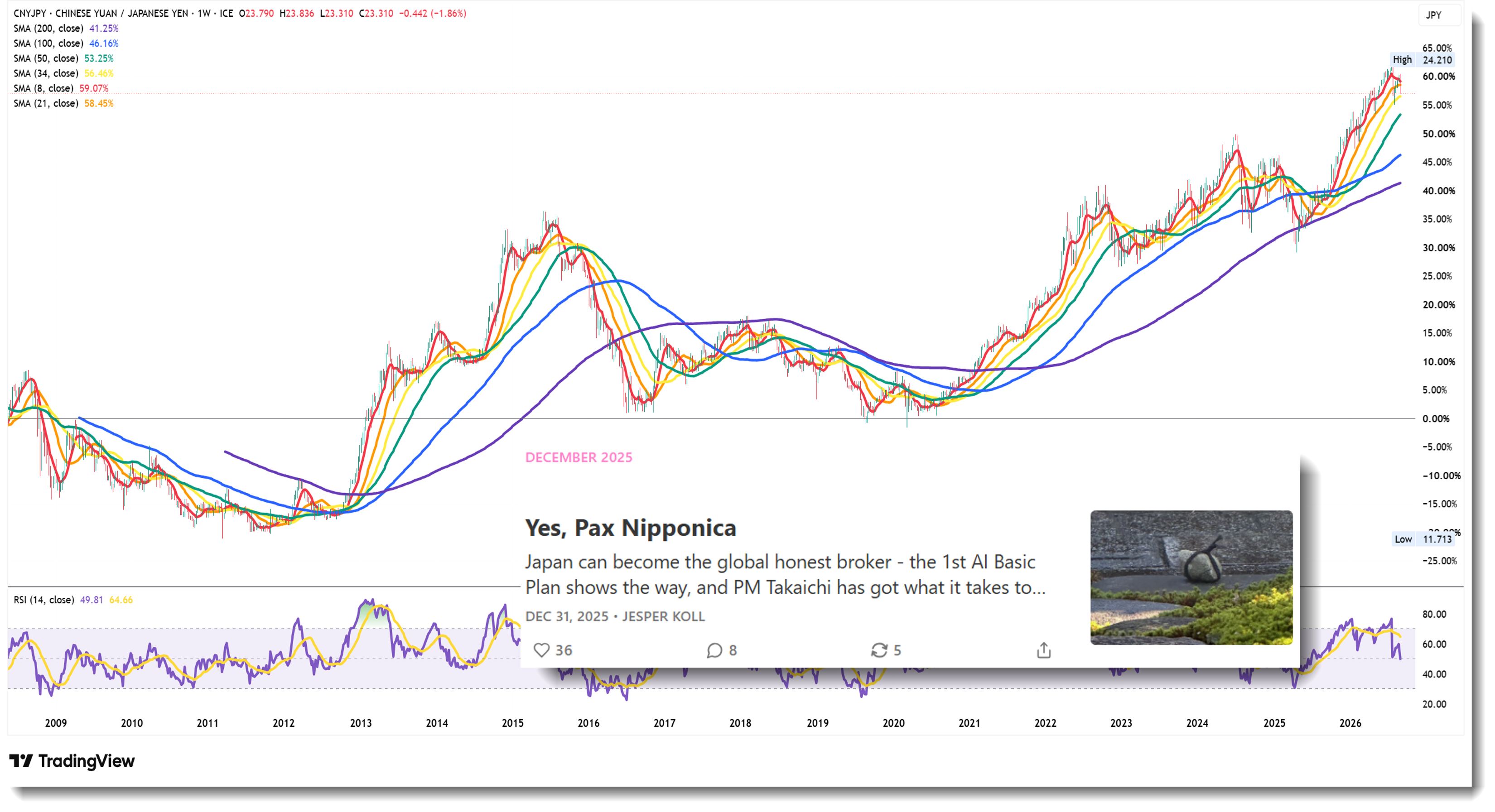
Japan is hedging through Indo-Pacific alliances: Australia (11 frigates, 3 built in Japan and the rest in a Japanese-revitalized Australian shipyard) and a deepening India corridor.
Banks: forced to become utilities under zero rates, they now have net interest income from the steepener; the bull case is the credit multiplier from PPP loan demand (the 370 trillion yen, 60% of GDP, reindustrialization will be funded by PPPs, not JGBs) plus fee income from MBOs, M&A and IPOs.
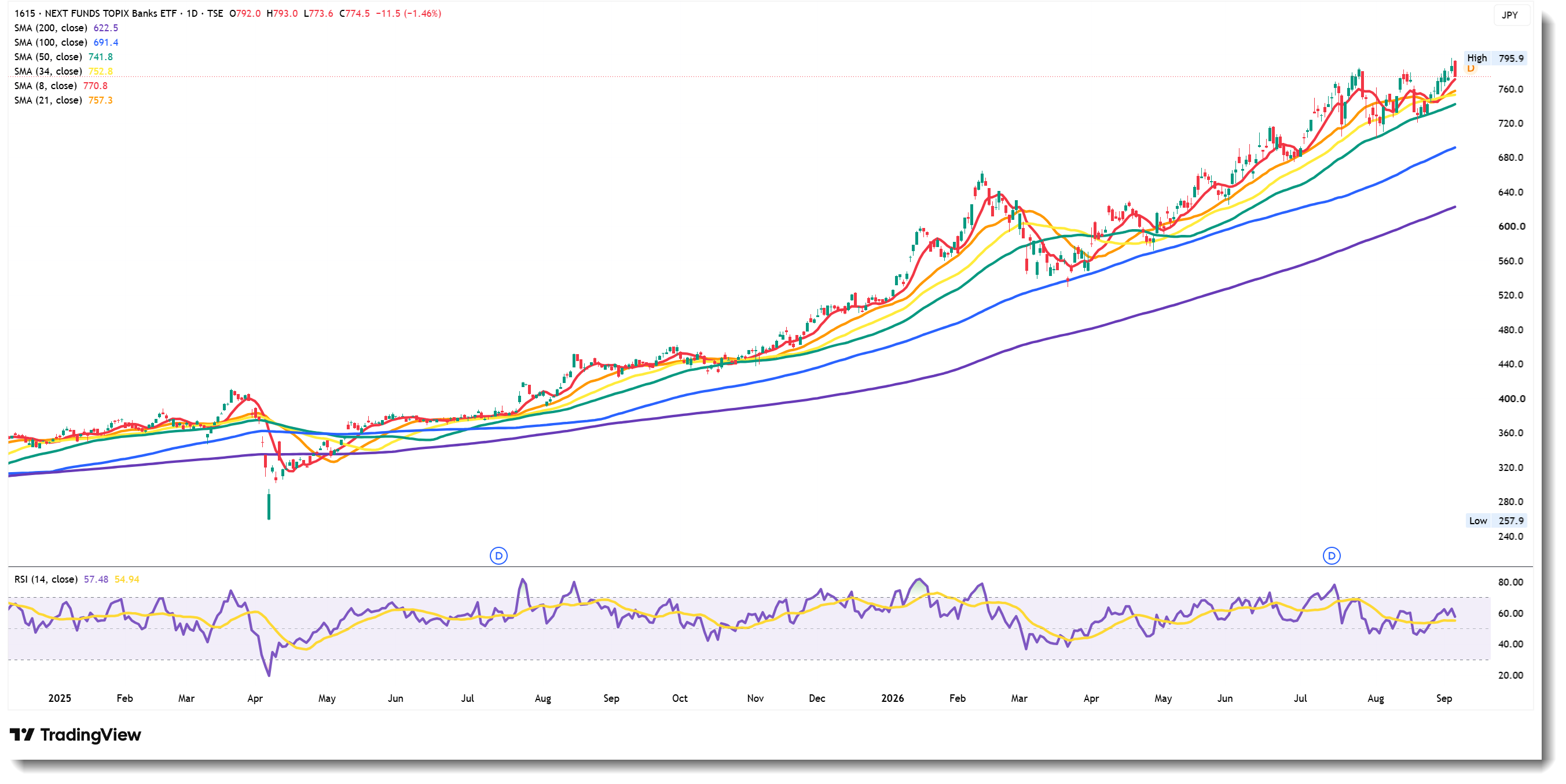
Single names: MUFG-Morgan Stanley is the success story, making 1 plus 1 equal 4; watch Sumitomo (SMFG), whose Jefferies stake is likely to grow into a similarly powerful franchise.
Deposits: sticky so far, but the mattress money (goldfish stuck in jelly) is becoming unstuck through inflation and deposit competition (Shinsei Bank offering 1.7% on 3-month deposits; SBI and Shinsei very aggressive); roughly 1.3 times GDP shifts as the boomer generation dies and heirs move regional bank money to the cities.
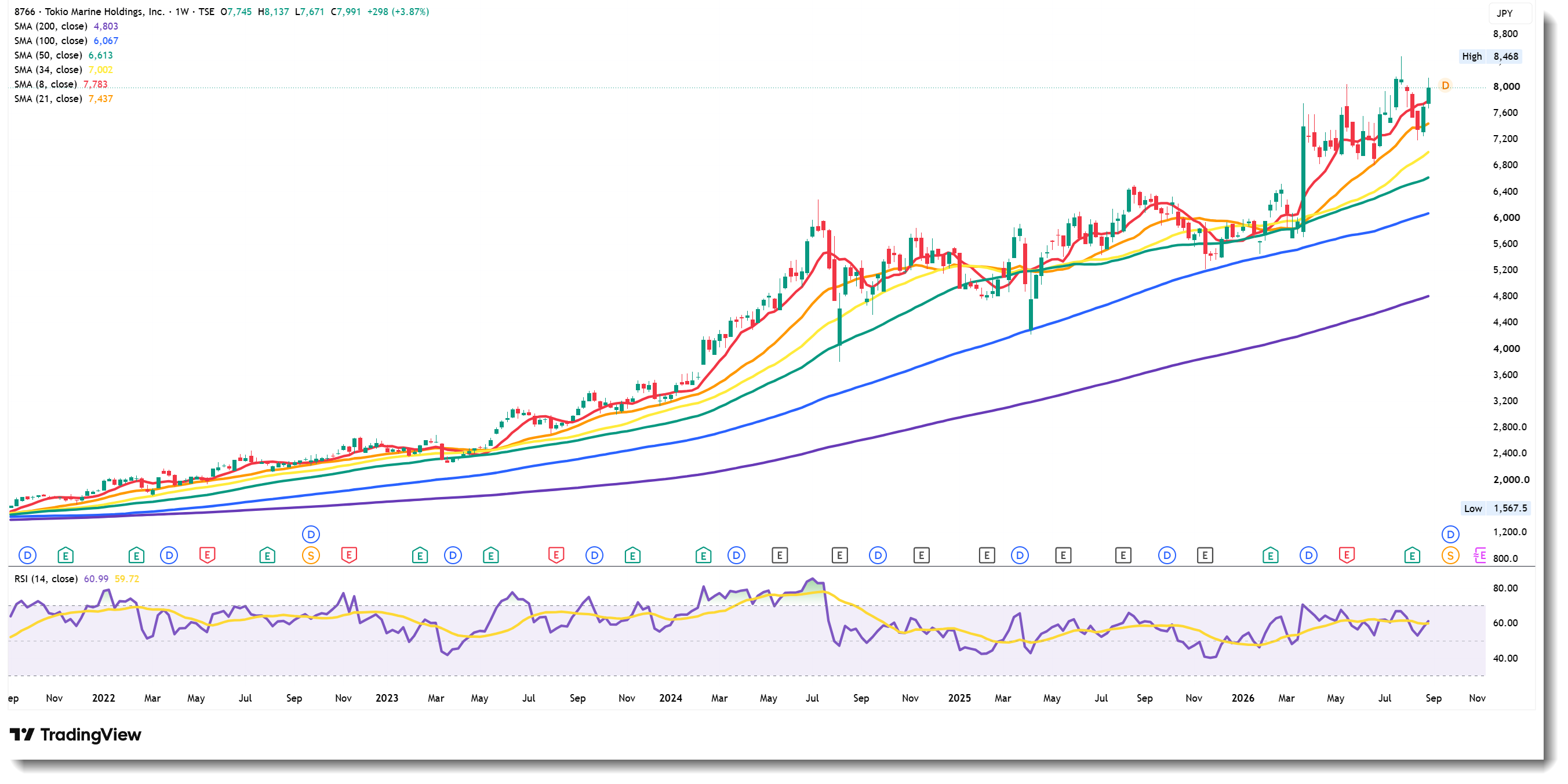
Bullish Tokio Marine: first Japanese asset manager with pay-for-performance for fund managers, now partnered with Berkshire Hathaway; could become Japan’s first globally relevant asset manager within five years.
Generational flip: the average outgoing CEO is 68, the incoming one 52; the Ice Age generation is taking over corporate Japan and is comfortable making decisions, doing M&A and even MBOs, happily financed by the mega banks.
Japan has real assets, Hello Kitty does three times Disney’s revenue, and 38 trillion yen of the 370 trillion program targets anime and content; the 19th-century media companies could consolidate into global powerhouses.
Energy is the pinch point: Komatsu and peers cite energy cost certainty as the top obstacle to reshoring, nuclear restarts remain slow, and if the Strait of Hormuz stays closed, Japan’s strategic oil reserves run out around January to February
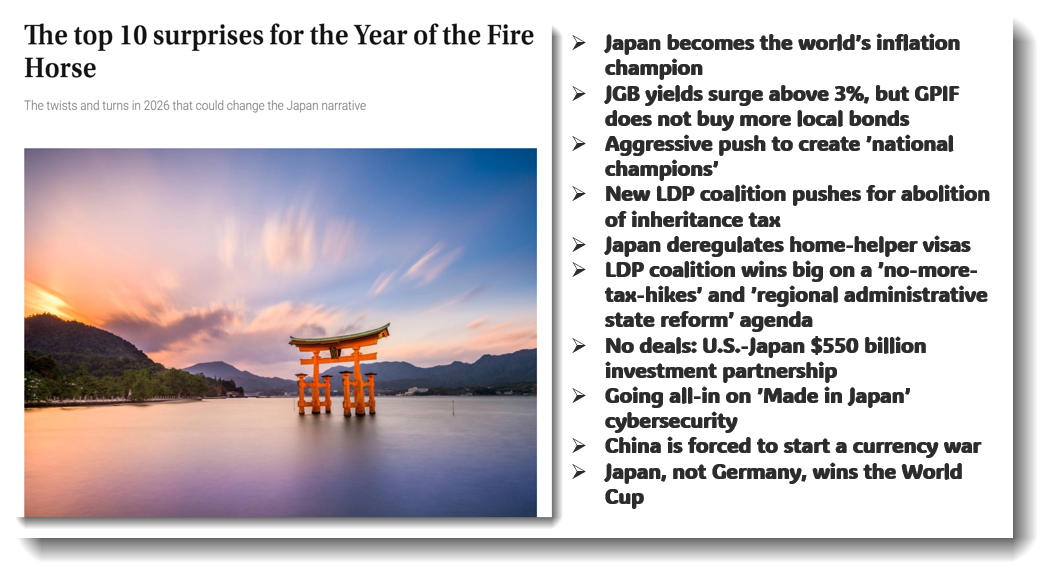
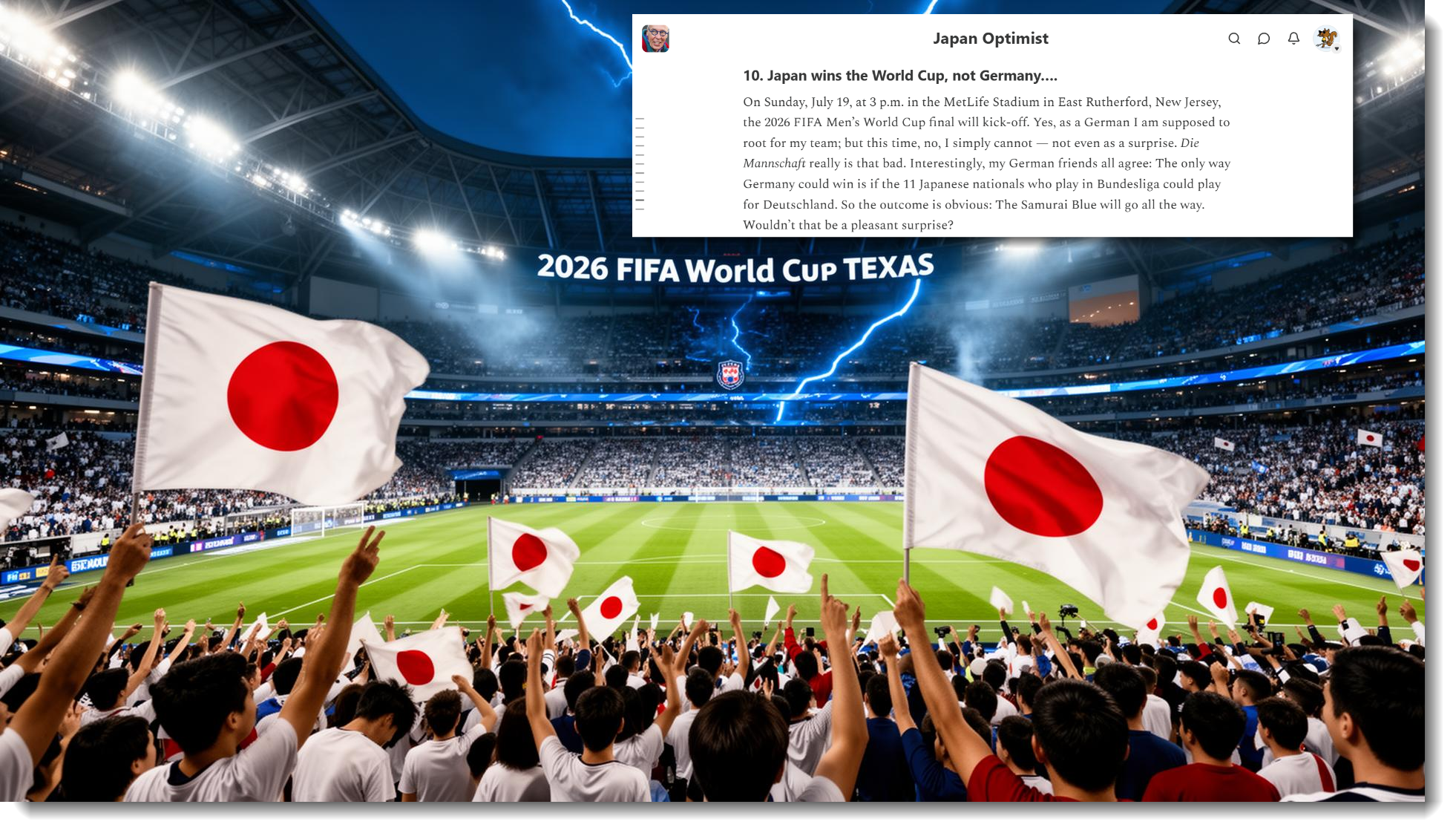
The 2026 Prediction that Missed - Better Luck in 2030!
If you act on anything provided in this newsletter, you agree to the terms in this disclaimer. Everything in this newsletter is for educational and entertainment purposes only and NOT investment advice. Nothing in this newsletter is an offer to sell or to buy any security. The author is not responsible for any financial loss you may incur by acting on any information provided in this newsletter. Before making any investment decisions, talk to a financial advisor.


