

For Episode 96 the show brings ‘Black Monday’ (we think not!) chatter, neocloud CDS blow outs, and Brent 2027 going vertical. We break down the first real pain at index level this year, why the AI unwind is a positioning flush and not the big one, the sovereign backstop question hanging over Anthropic / OpenAI and the data center complex, and where the smart money is actually hiding. All that, plus the Squirrel’s latest work on the ‘Twenty for Twenty’ portfolio (Global Industrials) and why BYD might be the world’s most impressive industrial company but a less impressive stock.
Latest LLM / Token Chart Packs

Show Notes
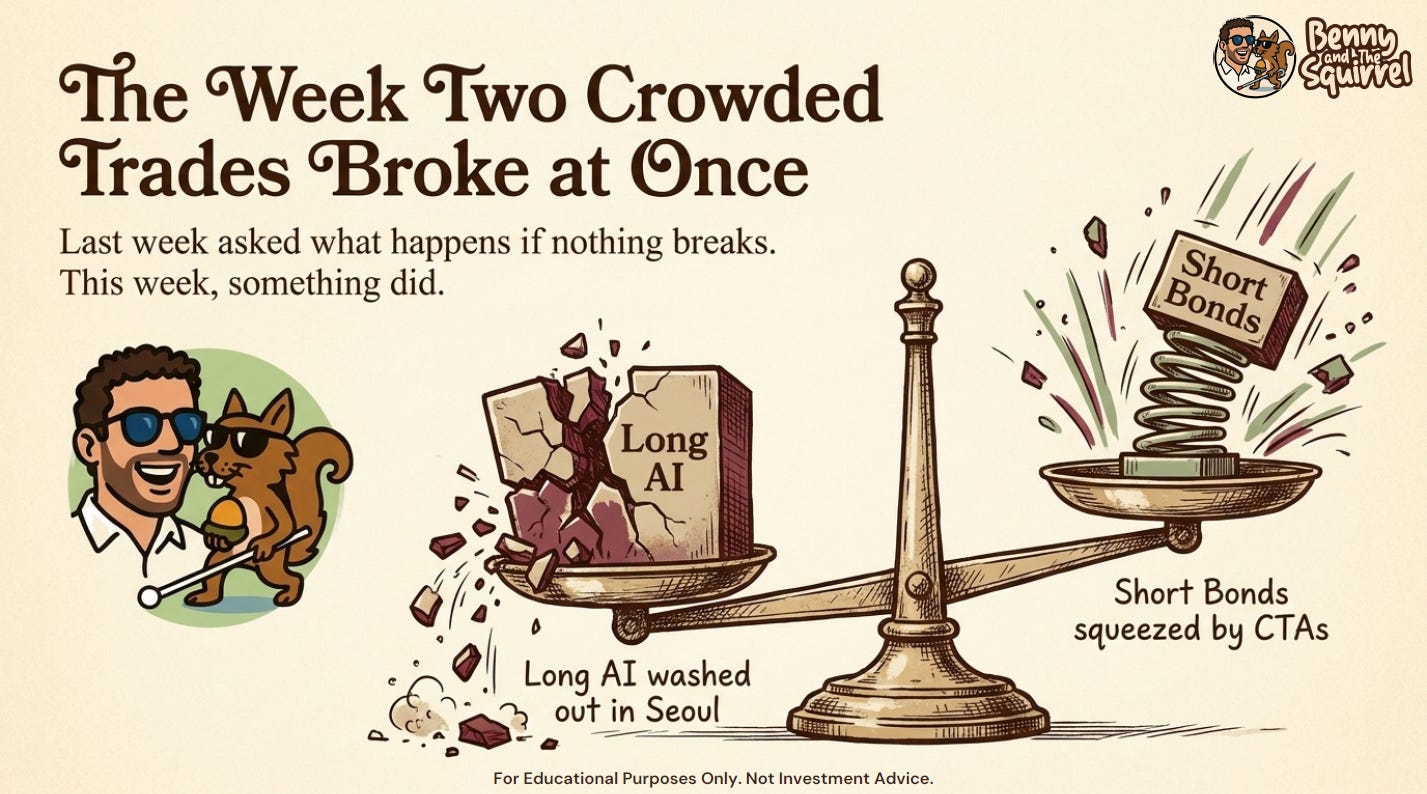
The week that was, and the AI unwind
Key dynamics: a continued bid to bonds and growing concern about the AI narrative unwinding, centered primarily on neocloud balance sheets, a theme running since the Amish episode in March.
The hosts turned bearish in early June, calling the blow-off top in AI CapEx recipients.
SpaceX segment: the biggest unlock is coming; the market is being warmed up for a possible Tesla-SpaceX merger; SpaceX supply was talked about all summer but nobody is positioned. Shares went from around 210 down to near 100; the company has raised roughly $65bn in credit since listing (including a new $40bn package of $30bn IG plus $10bn term loan) plus around $110bn in equity. Elon has taken roughly $86bn in cash out of the market.
Last week’s price action and positioning (Minute 5)
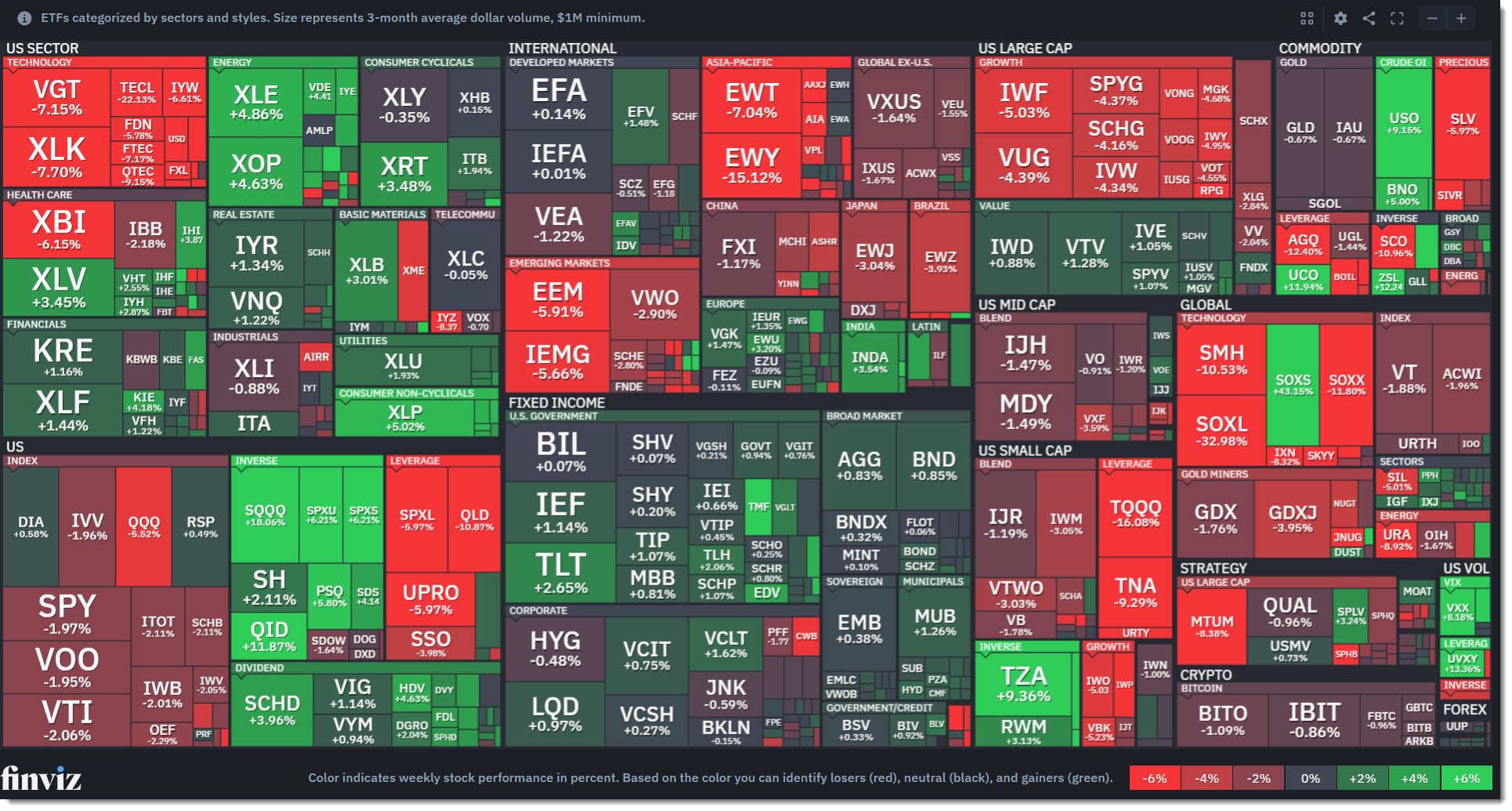
First real pain at index level after months of poor breadth: defensives caught a bid, staples up over 5 percent and utilities rallied.
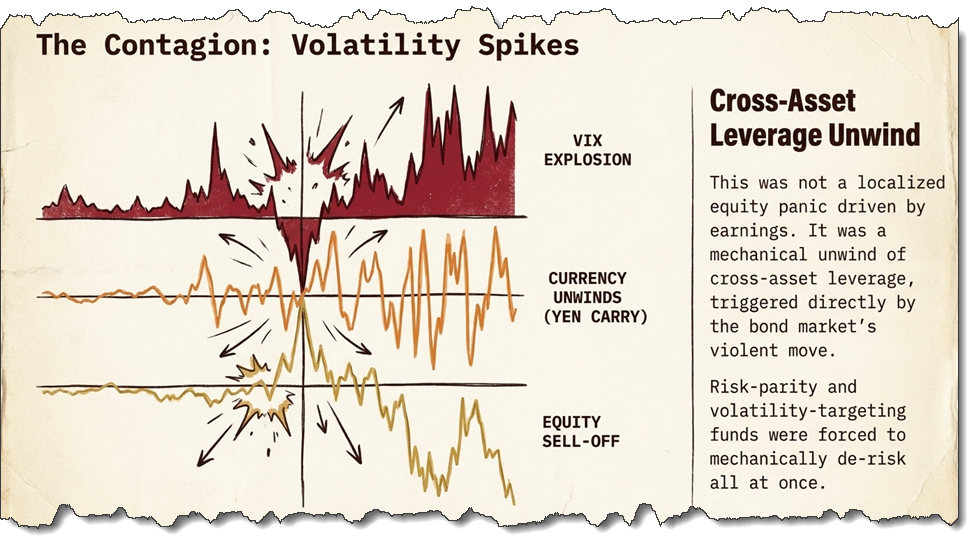
We doubt this is the flush moment: it looks like an overcrowded trade unwinding on positioning and liquidity, with vol and implied correlation too low, a pattern seen repeatedly over the past fifteen years.
Midterm history suggests risk trades well afterwards; a Democrat result probably would not be great for stocks.
Growth-scare data points: Anthropic numbers came in “miss-ish,” average token price hit an all-time low, and rumors that the IPO timetable could slip again. A slipped $100bn Anthropic IPO at a $2tn pre-money valuation could paradoxically be bullish for year-end liquidity.
Triggers: the pulled Firmus IPO in Australia (long end of the curve bid from 5.70% to 5.40% since), plus UK neocloud Nscale having a major Microsoft contract pulled over the weekend. Amusing tweet: “if I were Jensen, I’d simply buy all my clients.”
Positions, sovereign backstops and China (Minute 9)
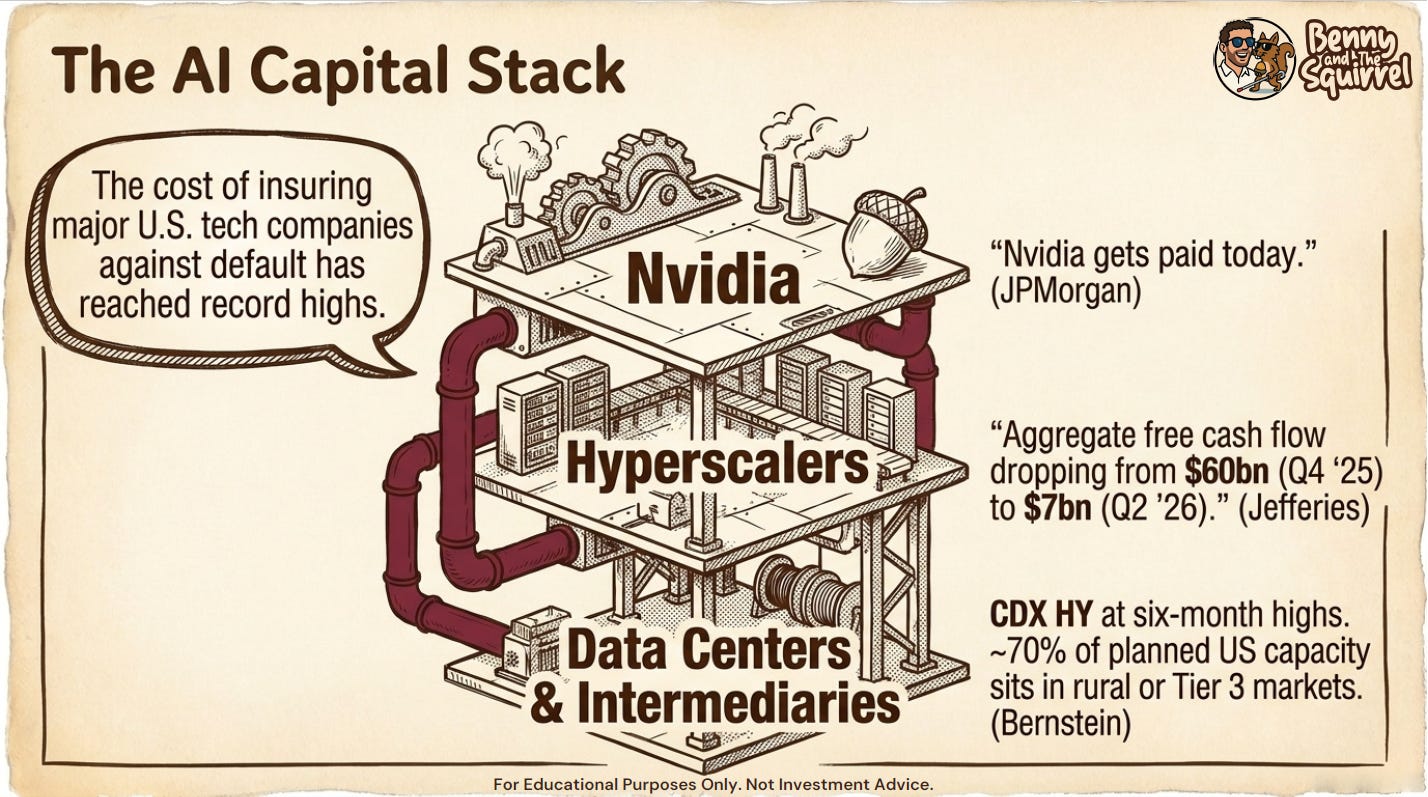
🐿️ is short Oracle and CoreWeave but nervous about NVIDIA acting as “the central bank of AI” and papering over the stress.
“Too big to fail” whispers about OpenAI are now circulating, an idea the show covered with Brandon Carl (guest on next week’s show) and in earlier episodes.
What sovereign intervention would actually mean: backstopping Wall Street’s data center credit at the monetary level rather than taking golden shares. OpenAI’s CFO floated a government backstop in Q4 2025 before walking it back on LinkedIn.
The circular dependency problem: OpenAI’s commitments underpin Oracle and cloud backlogs plus data center DDTLs; if OpenAI goes down, data centers, debt and collateral go down with it, a GFC-style chain. The flip side is adding huge liabilities to the sovereign just as debt refinancing costs are under scrutiny.
China keeps making tokens cheaper: the latest DeepSeek model offers near-frontier capability at roughly a 90 percent token-cost discount, so any US sovereign underwriting would be backing a disastrous forward P&L structure and would likely need to be twinned with protectionism.
Fortune 500 companies increasingly want to build their own AI on open-source models and their own hardware for data security; fraud risk is rising; large corporates are blocking agentic access to their APIs, and technically blocking agents is much harder than it sounds.
Korea trigger and the IPO pipeline (Minute 21)
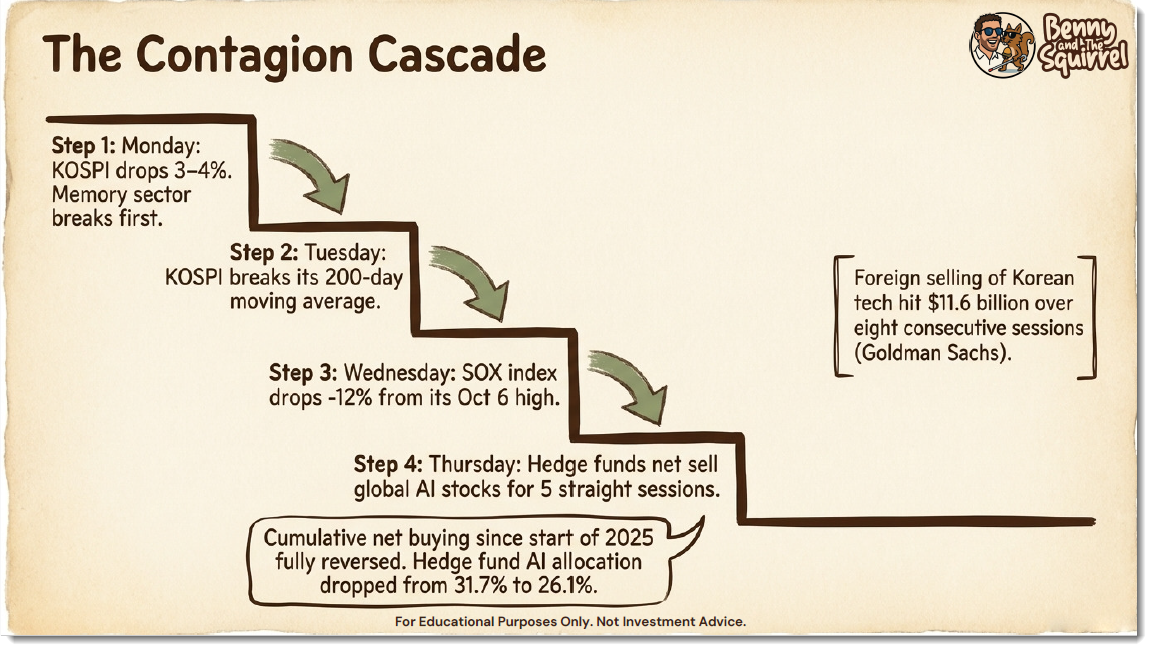
Korea looks like the proximate trigger, reacting to the Anthropic numbers. The SK Hynix ADR still trades at roughly a 50 percent premium to the Seoul listing, which cannot be arbitraged. Even international retail can buy locally, so there is no reason to pay the ADR premium.
OpenAI is definitely not coming public this year; Anthropic price talk is sliding from $2tn toward $1.5tn pre-money, and the view is they should just price at $1tn and get it out the door.
IPOs are momentum games: publicly talking down valuation before pricing is almost unprecedented (closest comp is Facebook’s 2012 “mobile problem”, but at a $100bn valuation, not $1.5 to $2tn). Too late to halve the target now, and the forward capital problem, roughly half a trillion to raise over four to six years, means they have to start big.
Energy: the real hiding place (Minute 25)
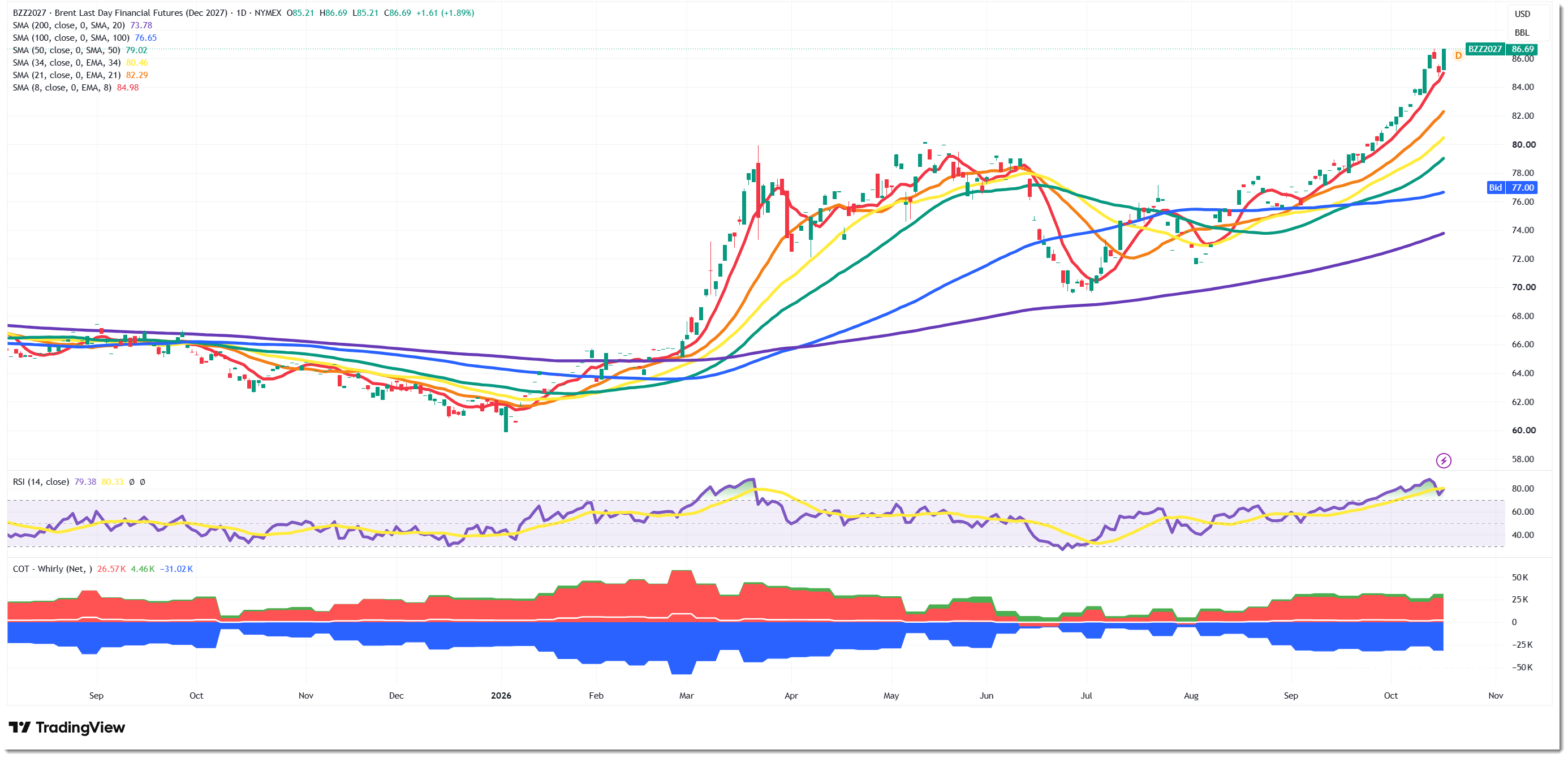
Energy was again a good place to hide. The standout chart is December 2027 Brent: the market is reaching for long-dated contracts while large spec shorts (COT data) remain substantial.
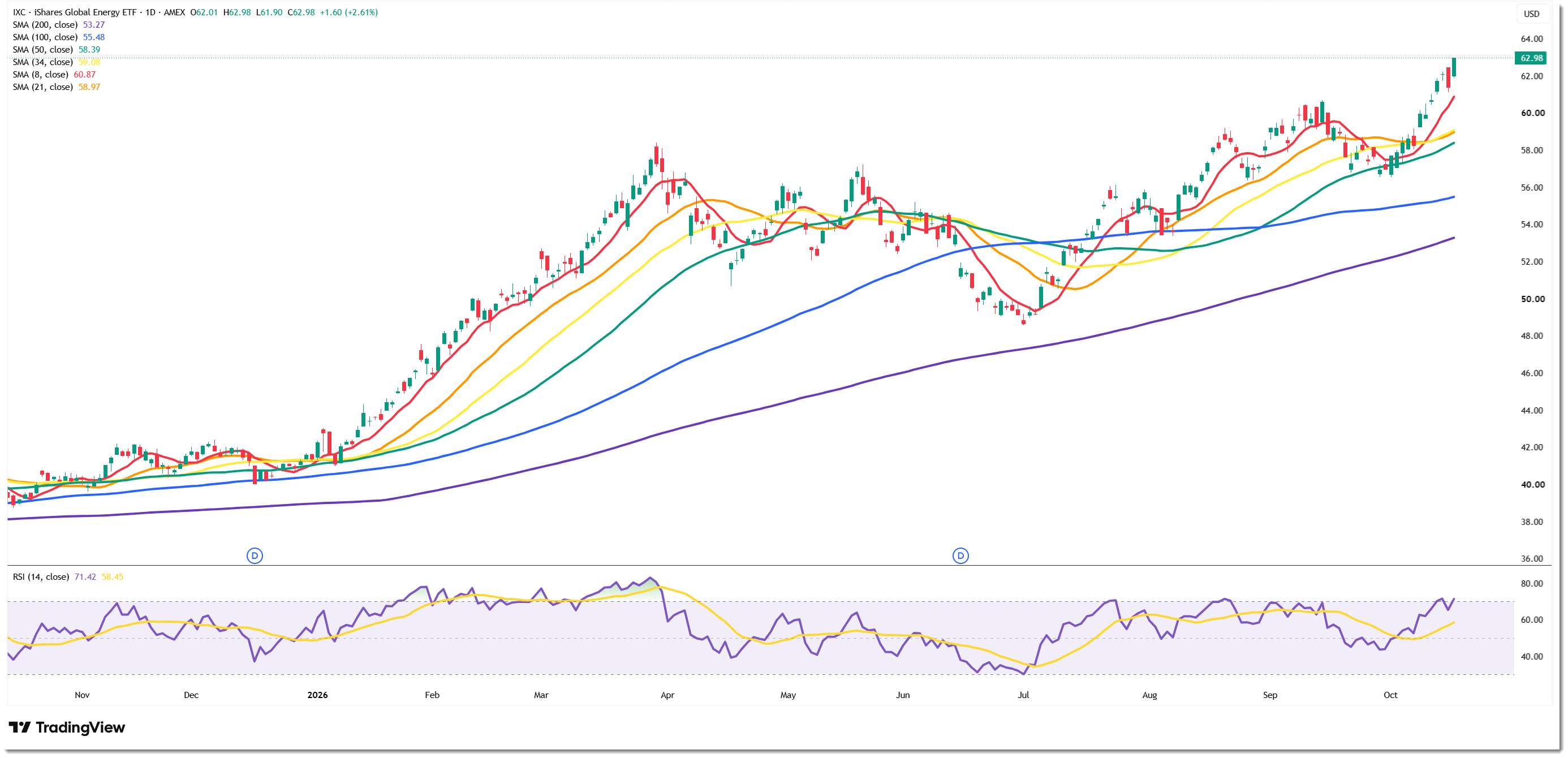
Under the “China collar” theory, the move in long-dated crude underwrites the energy equities; the IXC global energy ETF chart looks strong.
Spike risk is higher now: Jesper Kohl’s point that Japan runs out of reserves by January; China is down an estimated 300 to 400m barrels; global reserves are being drawn. Transport costs now add $20 to 30 per barrel, yet China is still lifting cargoes, suggesting more right tail.
Demand is low volatility (COVID aside); supply is where the volatility sits. A double negative, soft demand against an even worse supply situation, could still push prices up.
Rotation mechanics (Minute 30)
The AI trade is 40-plus percent of the S&P; neither host thinks it is truly rolling over yet, and if AI rolls over while the index holds via rotation, their non-AI longs benefit.
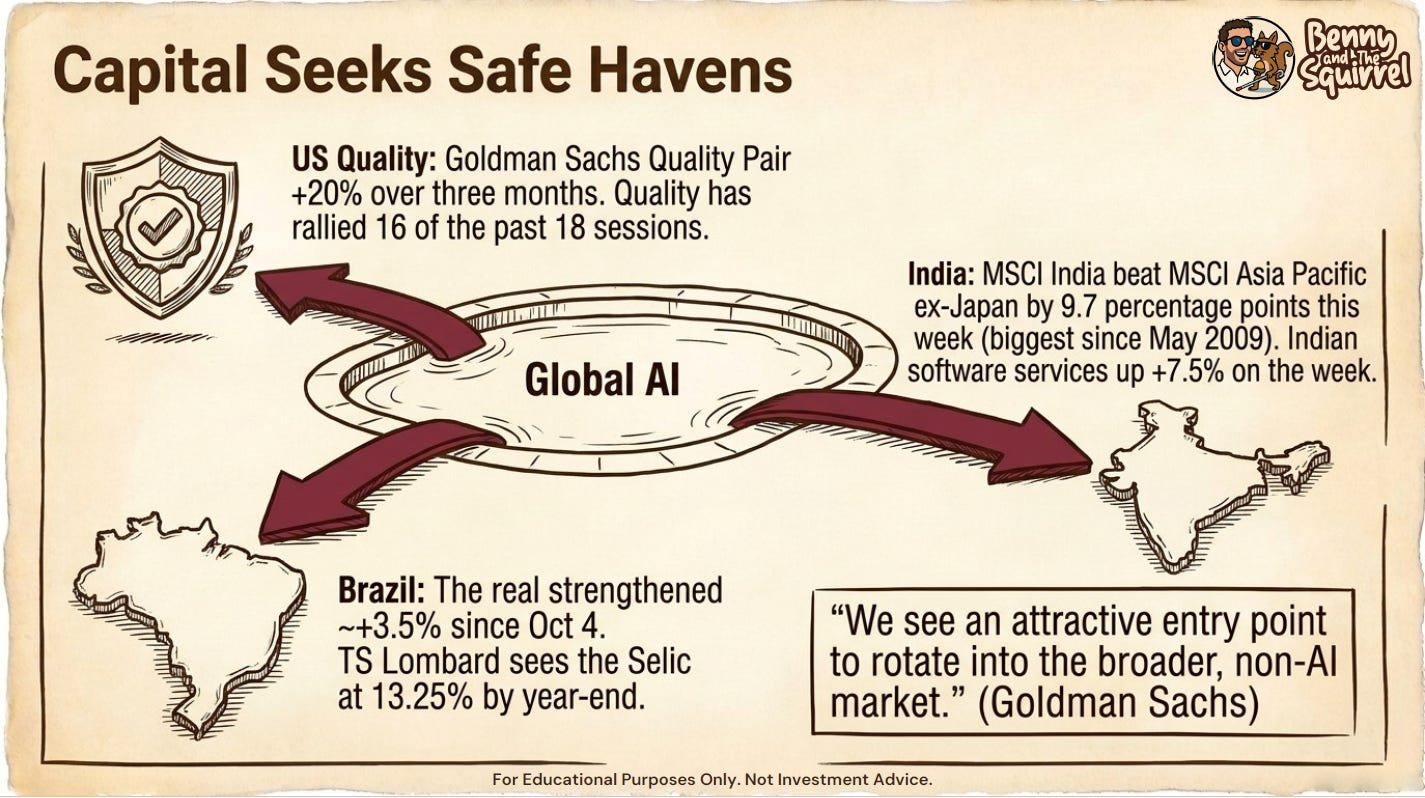
India outperformed the rest of Asia massively last week; Brazil is trading on its own election cycle with the runoff the following week. Both are read as positioning: popular funding shorts (staples, Infosys, TCS-type names) getting squeezed in a degrossing.
The “causal barbell”: implied correlation near zero with single-stock vol in the 99th percentile forces leveraged pods to degross when correlation rises, so shorts rip and longs get sold, but it does not cascade the way old crash analogies suggest.
Twenty for Twenty - The Industrials (Minute 35)
Twenty for Twenty portfolio update: work began on industrials.
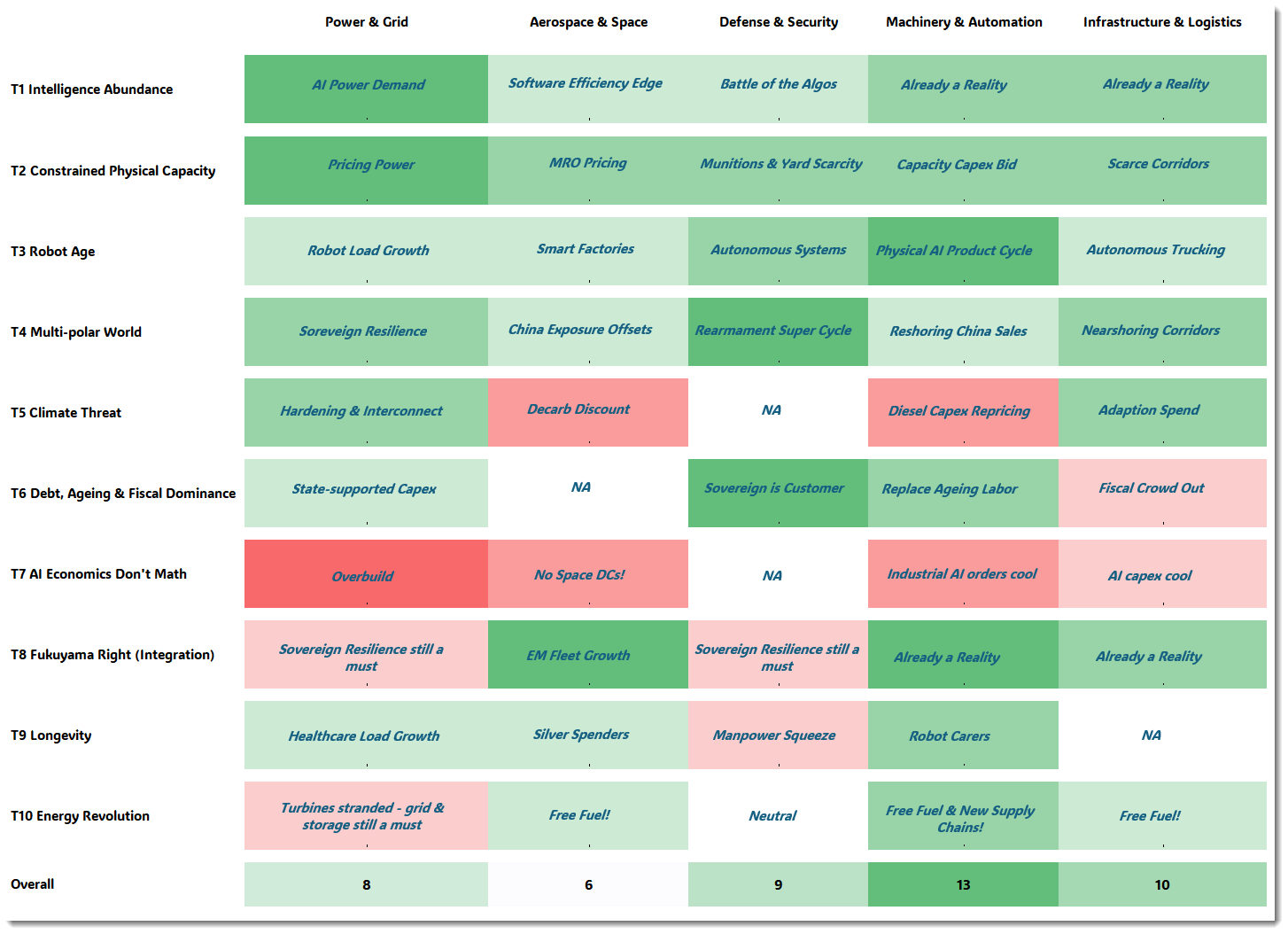
The key industrial question is the China scenario (the “panda in the room”)
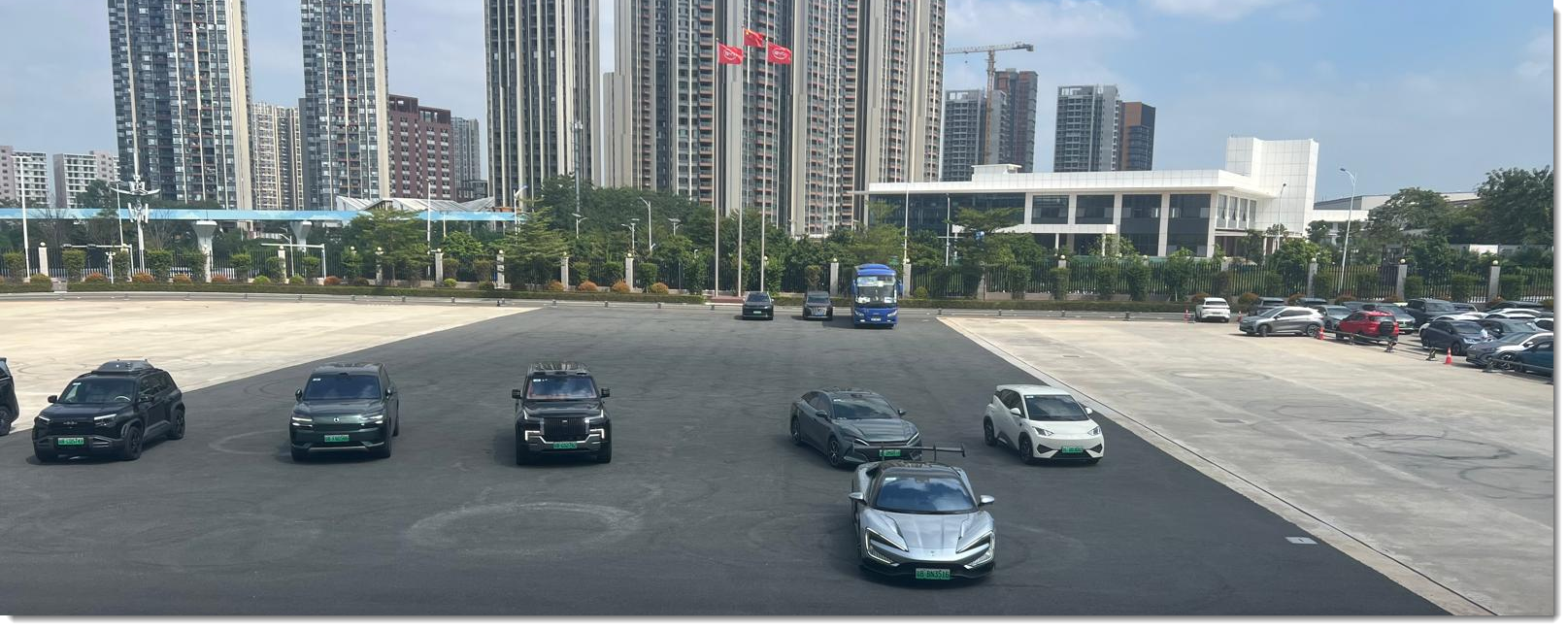
BYD - arguably one of the most impressive industrial companies on the planet, but a great company is not necessarily a great stock. Deflationary technologies are hard to monetize compared with regulatory-capture industries and full-contact capitalist competition in Chinese industrials should never be underestimated.
If you act on anything provided in this newsletter, you agree to the terms in this disclaimer. Everything in this newsletter is for educational and entertainment purposes only and NOT investment advice. Nothing in this newsletter is an offer to sell or to buy any security. The author is not responsible for any financial loss you may incur by acting on any information provided in this newsletter. Before making any investment decisions, talk to a financial advisor.


